
Why Retirees Are Flocking to AI Language Apps in 2026: How Learning a New Language After 60 Boosts Brain Health and Fights Cognitive Decline
Every three seconds, someone in the world develops dementia. That number is climbing. By 2050, researchers project 139 million people will be living with it—and right now, there is no cure. But there is something you can do today, something surprisingly enjoyable, that a growing mountain of scientific evidence says may delay cognitive decline by years. You can learn a new language.
This isn't wishful thinking. This isn't a supplement ad. A landmark 2025 European study tracking 86,000 adults just confirmed what neuroscientists have been suspecting for over a decade: multilingualism physically slows brain aging. And thanks to a quiet revolution in AI-powered conversation partners, language learning after 60 has never been more accessible, more forgiving, or more effective.
Let's get into why this matters so much—and why it matters right now.
The 86,000-Person Study That Changed Everything
You've probably seen headlines. But headlines don't capture what makes this research so extraordinary, so let me nerd out for a moment because the details here are stunning.
The study, published and covered by Scientific American in late 2025, drew on cognitive data from participants across 11 European countries. It wasn't a small lab experiment. It wasn't a pilot program. It was one of the largest investigations into bilingualism and brain aging ever conducted, spanning decades of longitudinal data, controlling for education, socioeconomic status, physical health, and a dizzying number of confounding variables that typically weaken these kinds of claims.
The finding? Adults who spoke two or more languages showed measurably slower cognitive decline compared to monolinguals—even when they'd learned the second language later in life. Stop.
That last part is the part everyone misses. You don't have to have grown up bilingual. You don't need childhood immersion. The cognitive benefits of language learning appear to accrue regardless of when you start, which means someone picking up Portuguese at 67 is still building neural armor against decline. The brain doesn't care about your age. It cares that you're challenging it.
Why Language Learning Specifically? The Neuroscience Is Fascinating
Exercise is great for the brain. Puzzles help. Social engagement matters. But language learning is different, and here's where I get genuinely excited because the mechanism is so elegant.
Learning a language doesn't just activate one brain region. It activates almost all of them—simultaneously. When you hear a new word, your auditory cortex lights up. When you try to remember its meaning, your hippocampus engages. When you attempt to pronounce it, your motor cortex fires alongside Broca's area. When you decide between your native language and the new one, your prefrontal cortex—the brain's executive command center—has to manage the conflict, inhibit one system, activate another.
This constant juggling act is what neuroscientists call "cognitive reserve." Think of it as a buffer, an emergency fund of neural connections and processing efficiency that the brain draws on when age-related damage inevitably occurs. The bigger the reserve, the longer the brain compensates before symptoms of decline become noticeable. And nothing builds cognitive reserve quite like the full-brain workout of managing two languages.
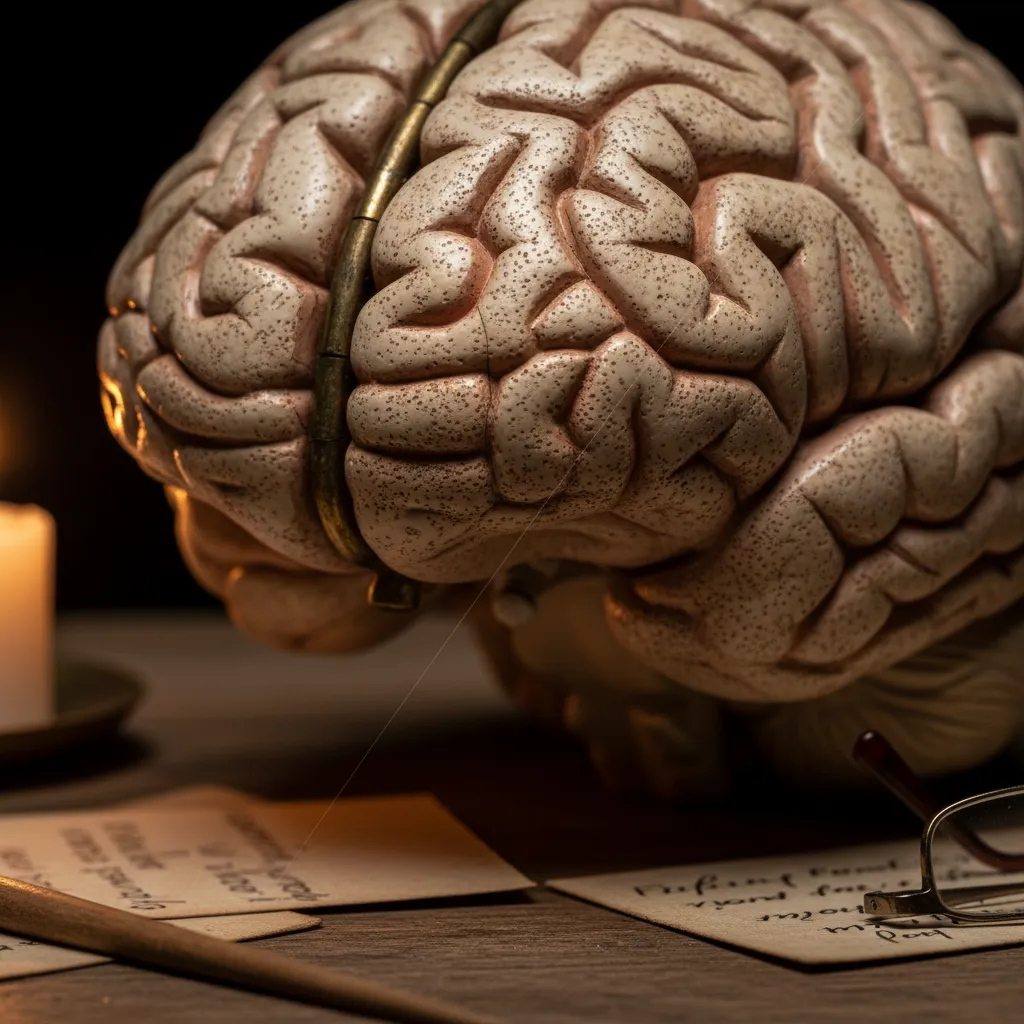
A 2024 meta-analysis in Neuropsychologia confirmed this: bilingual individuals showed an average delay of 4–5 years in the onset of dementia symptoms compared to monolinguals. Four to five years. That's not a marginal gain. That's potentially thousands of days of independent living, of recognizing your grandchildren's faces, of holding a coherent conversation with someone you love.
The Problem: Traditional Methods Were Never Designed for Retirees
So if the science is this compelling, why hasn't every retiree already signed up for Spanish class? Because until very recently, the available options were terrible. Full stop.
Community college courses move at the pace of their youngest, most anxious students. Group classes mean performing in front of strangers, risking embarrassment, being corrected publicly—which research consistently shows is the single fastest way to make an older adult quit. Textbooks assume you have the schedule flexibility and rote memorization stamina of a 20-year-old. Traditional apps gamify everything into frantic point-scoring that prioritizes streaks over actual conversation ability.
None of this was built for someone who's 65, has a lifetime of professional accomplishment, and simply wants to have a real conversation in Italian without being treated like a child. The tools weren't wrong in theory. They were wrong in design. They ignored the specific needs, pace preferences, and emotional landscape of language learning for older adults.
And so millions of people who stood to benefit the most were quietly excluded from one of the most powerful brain health interventions available.
The AI Breakthrough: A Patient Tutor Who Never Judges
This is where 2026 gets interesting.
AI conversation partners have crossed a threshold. They aren't chatbots anymore. They aren't scripted dialogue trees with robotic voices and canned responses. Modern AI language tutors—like the conversation partners we've built at LingoTalk—can hold natural, flowing, adaptive conversations that adjust in real time to your level, your interests, your pace, and even your mood.
Say that again slowly. They adjust. If you're struggling with verb conjugation, the AI doesn't barrel forward. It gently revisits the concept, rephrasing, offering new examples, letting you try again without a shred of impatience. If you're having a confident day and rattling off sentences, it raises the complexity, introduces new vocabulary, challenges you just enough to keep the brain engaged without triggering frustration.
This is what makes AI language apps for seniors fundamentally different from anything that came before. There's no classroom to commute to. No fixed schedule. No audience. No embarrassment. Just a patient, endlessly available practice partner sitting in your pocket, ready whenever you are—at 6 AM with coffee, at 11 PM when you can't sleep, during the quiet Tuesday afternoon when the house feels too still.

For retirees specifically, this removes every single barrier that mattered. Every one.
What the Research Says About Starting Late
Here's the question I hear most from people over 60: "Isn't it too late for me?" I love this question because the answer is so satisfying.
No. Emphatically, measurably, neurologically—no.
A 2023 study from the University of Edinburgh followed adults aged 60–80 who began learning a new language from scratch. After just five months of regular practice, participants showed significant improvements in attention switching, working memory, and verbal fluency compared to a control group. Five months. Not five years. These weren't bilingual prodigies. They were complete beginners.
The brain retains its plasticity far longer than we once believed. Yes, it changes with age. Yes, certain types of memory consolidation slow down. But the fundamental ability to form new neural connections, to strengthen synaptic pathways through repeated use, to build cognitive reserve—that doesn't expire. It just needs the right kind of stimulation. And language learning, with its unique combination of memory demands, social-emotional engagement, pattern recognition, and motor skill practice, provides exactly that stimulation.
Will you learn as fast as a teenager? Probably not. Will the cognitive benefits be real and meaningful? The evidence says absolutely yes.
Beyond Brain Health: The Retirement Benefits Nobody Talks About
Cognitive decline prevention is the headline, and it deserves to be. But let me go one layer deeper because the secondary benefits of language learning in retirement are almost as compelling.
Social connection. Loneliness is an epidemic among older adults, and the health risks rival smoking. Learning a language opens doors—to conversation groups, to travel experiences, to relationships with people you literally couldn't communicate with before. It gives you a reason to engage.
Purpose and identity. Retirement strips away professional identity overnight. Language learning provides a new identity as a student, a learner, someone who is actively growing rather than winding down. That psychological shift matters enormously for mental health and motivation.
Travel transformation. Ordering coffee in perfect Portuguese in Lisbon. Navigating a market in Marrakech. Chatting with a shopkeeper in Kyoto. These aren't fantasies—they're Tuesday, once you have even conversational ability in a new language. And AI conversation practice makes those real-world moments dramatically less intimidating because you've already rehearsed them dozens of times with a patient, forgiving partner.
How to Actually Start: A Practical Path Forward
Enough science. Let's get practical.
If you're over 60 and considering language learning—or if you're an adult child reading this on behalf of a parent you love—here's what the research and our experience at LingoTalk suggest works best:
Pick a Language With Personal Meaning
Motivation matters more than difficulty ratings. Choose the language connected to your heritage, your travel dreams, your grandchildren's other family, or the culture that's always fascinated you. Emotional connection predicts consistency far better than any "easiest languages" list.
Start With Conversation, Not Grammar Tables
AI-powered conversation practice lets you begin using the language from day one. This is critical for older learners because it provides immediate reward and context, which strengthens memory encoding dramatically compared to abstract rule memorization.
Aim for Consistency Over Intensity
Fifteen minutes a day, five days a week, outperforms a single two-hour weekend session every time. The brain builds connections through repeated, spaced exposure. LingoTalk's AI conversation partners are designed for exactly these kinds of short, meaningful sessions—low pressure, high engagement, built around your actual life.
Embrace Mistakes as Neurological Gold
Every error you make and correct is a neural pathway being reinforced. This is not a platitude. This is literally how synaptic strengthening works. An AI partner that lets you stumble, try again, and succeed isn't being "easy on you"—it's providing the exact error-correction cycle that builds the strongest cognitive reserve.
The Window Is Open
Here's what keeps me up at night thinking about this topic. The science is clear. The tools finally exist. The 60+ population is the fastest-growing demographic of smartphone users. Every piece is in place.
But awareness lags behind reality. Millions of older adults who could be building cognitive reserve right now—who could be delaying dementia onset by years, enriching their retirements, connecting with new cultures and communities—don't know this option exists. They still think language learning is for kids. They still think they've missed their window.
They haven't. The window is wide open, and an endlessly patient AI tutor is sitting on the other side, ready to say "hello" in whatever language sparks joy.
If that's you, or someone you love—start today. Your brain will thank you for every single session.
Ready to speak a new language with confidence?