
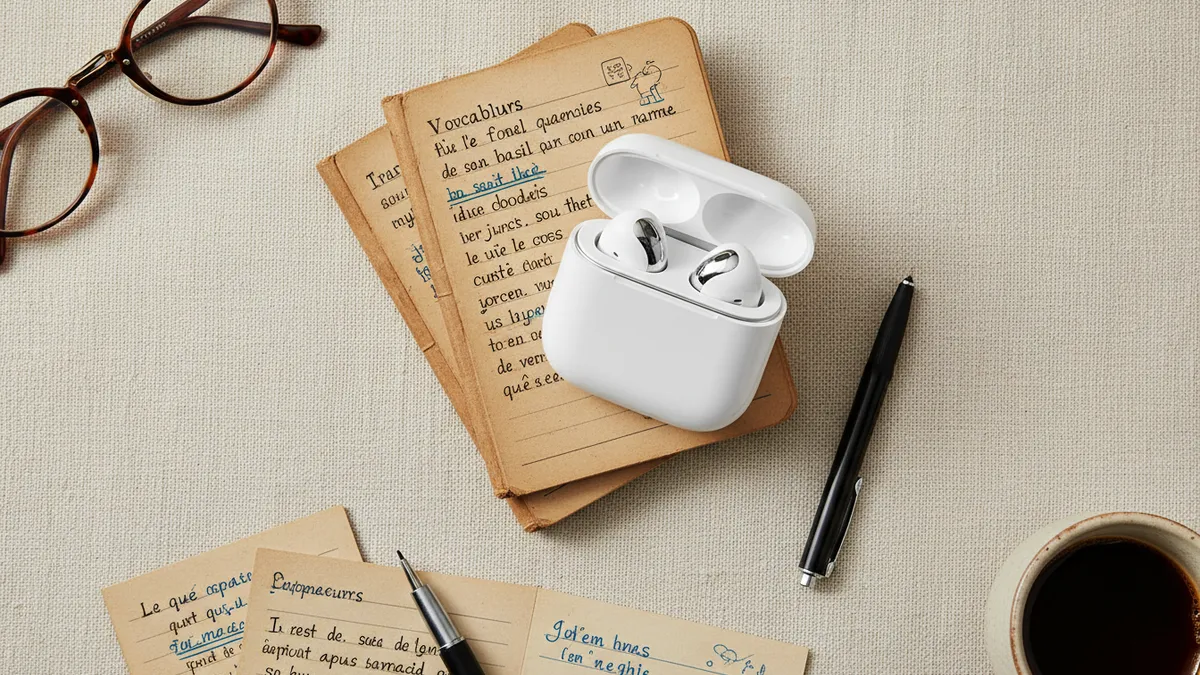
AI Translation Earbuds Are Everywhere in 2026 — Here's How Smart Language Learners Are Using Them as a Secret Fluency Training Tool (Not Just a Crutch)
Here's the conclusion up front: after six months of experimenting with AI translation earbuds across three languages — Mandarin, Portuguese, and Turkish — I can tell you they didn't destroy my motivation; they supercharged it. But only because I stopped using them the way the marketing tells you to.
The $200M+ translation earbud market flooding Amazon and TikTok in 2026 is built on one promise — seamless, real-time communication without learning the language. Timekettle, Google Pixel Buds, and a dozen newcomers want you to believe you'll never need a flashcard again. And most reviews play along; they test the translation accuracy, compare latency, rank them against each other, and move on. But nobody's asking the real question that language learners care about — can these earbuds actually help you get better at a language, or do they just let you fake it?
I've been asking that question obsessively. And what I found surprised me.
Translation Earbuds Don't Kill Fluency — Passive Use Does
The earbud itself is neutral; your relationship with it determines everything.
Here's what I mean. When I first got a pair of Timekettle X1 earbuds last winter — mostly out of curiosity, partly out of desperation before a work trip to Istanbul — I used them exactly the way you'd expect. Someone spoke Turkish; the translation appeared in my ear; I responded in English; the earbud translated back. Frictionless. Effortless. And after two weeks of relying on them daily, I realized I hadn't retained a single phrase beyond teşekkürler (thank you) — which, honestly, I already knew.
That's the crutch mode. And it's seductive because it works — you genuinely communicate, you get things done, you navigate a city without fumbling — but your brain never has to struggle, and struggle is where acquisition happens. The neuroscience is clear on this; retrieval effort is what cements vocabulary and grammar into long-term memory. No effort, no encoding.
But — and this is the turn that changed everything for me — I started wondering: what if the earbud's translation delay could become a feature instead of a bug?
The "Listen-Then-Respond" Drill That Changed My Approach
Use the earbud's processing delay as a self-test window — your personal pop quiz in every conversation.
Here's the framework I stumbled into. Most real-time translation earbuds in 2026 have a 1–3 second processing delay; the speaker says something, there's a beat, and then the translation hits your ear. That gap? That's your testing ground. Instead of waiting passively for the translation, I started using that delay to attempt my own mental translation first — to guess, to reach, to try — and then let the earbud confirm or correct me.
It sounds simple because it is. But the effect compounded fast. Within a week of doing this in Portuguese conversations in Lisbon, I noticed I was beating the earbud to the translation maybe 30% of the time — and the ones I missed stuck in my memory precisely because I'd made the effort and failed. That failure-then-correction loop is essentially spaced repetition happening in real time; it's the same mechanism that makes apps like LingoTalk effective for structured practice, except it's unfolding in a live conversation with a real human being.

The practical setup is dead simple: keep one earbud in — I use the right ear — and leave the left ear open so you hear the original language clearly first. Listen with your whole brain. Attempt your translation. Then let the earbud either validate your guess or teach you the correct version. Over time, you start needing the earbud less — which is, ironically, the best possible outcome for a product you paid $200 for.
Pair Your Earbuds with AI Conversation Apps for "Immersion Walks"
The most powerful language learning hack of 2026 isn't an app or a gadget — it's combining both while moving through the real world.
Something I tried on a whim ended up becoming my favorite method. I call them immersion walks — though I'm sure someone on TikTok has a better name by now. The concept: you go for a walk in a neighborhood, market, or commercial area where your target language is spoken; you wear your translation earbuds; and you simultaneously run a conversation session on an AI language app — LingoTalk's conversation mode works beautifully for this because it adapts difficulty in real time — through your phone's speaker or a connected earbud.
The walk becomes a layered immersion experience. You're hearing ambient language around you — shop owners calling out, conversations drifting past, signs you're trying to read — while the AI app is prompting you with related vocabulary and situational dialogues. The earbuds sit in the background as your safety net; if you overhear something you can't parse, you can replay it through the earbud's translation. But because you're actively engaged with the AI conversation simultaneously, your brain is in acquisition mode rather than passive reception mode.
I did this three times a week in a Turkish neighborhood in Berlin — forty-minute walks, earbuds in, LingoTalk running situational Turkish dialogues about food shopping and greetings — and my comprehension jumped more in a month than it had in the previous three months of textbook study. The real world provides context that no classroom can replicate; the AI app provides structure and repetition that the real world doesn't naturally offer; and the translation earbuds provide the confidence to stay in the situation instead of retreating to English.
AI Earbuds vs Language Apps: It Was Never Either/Or
The debate between translation earbuds and language learning apps is a false binary — and the smartest learners in 2026 have figured that out.
Scroll through any language learning forum and you'll find heated arguments: are real-time translation earbuds helping or hurting fluency? People pick sides — the tech optimists who say earbuds democratize communication; the purists who say they're a crutch that kills motivation. I've been on both sides of that argument within the same week, honestly.
But after months of experimenting, my position is boringly pragmatic: the tool doesn't matter; the method matters. A translation earbud used passively is a crutch — full stop. A translation earbud used with intentional frameworks — the listen-then-respond drill, the immersion walk pairing, the techniques I'll cover below — is a fluency accelerator that didn't exist five years ago. Similarly, a language app used mindlessly — tapping through flashcards while half-watching Netflix — isn't doing much for you either. The magic happens when you combine tools with intention.
The best translation earbuds for learners in 2026 — whether you go with Timekettle, the new Google Pixel Buds Pro 2, or the surprisingly solid WT3 clones flooding Amazon — all have comparable accuracy for the major languages. What separates effective learners isn't the hardware; it's whether they've built a system around it.
Three More Tactical Frameworks I've Tested
Beyond the basics, here are specific drills that turned my earbuds from a travel gadget into a training device.
The Shadow Drill
When you're in a monolingual environment — a café, a train, a waiting room — and you overhear conversation in your target language, try to silently shadow (repeat internally) what you hear before the earbud translates it. You're not translating; you're building phonetic familiarity and prosody — the rhythm and music of the language. After the earbud translates, you now have meaning attached to sounds you just rehearsed. This is essentially the "shadowing technique" that polyglots have sworn by for decades, except the earbud adds an instant comprehension check.
The Reverse Translation Game
Set your earbuds to translate from your native language into your target language. Then narrate your surroundings out loud in English — "I see a woman carrying groceries; there's a red car parked on the left" — and listen to how the earbud renders it in your target language. Repeat the target-language version out loud. This is crude but remarkably effective for building active production vocabulary; you're essentially generating your own contextual phrase book in real time.
The Confidence Ladder
Start a real conversation using the earbuds as a full crutch — both sides translated. After five minutes, switch to a mode where only their speech is translated but you respond in the target language, mistakes and all. After another five minutes — if you're feeling brave — turn the earbuds off entirely and see how long you can sustain the conversation unaided. Then turn them back on when you hit a wall. This graduated exposure builds confidence without the terror of going fully naked into a conversation you're not ready for.

The Real Question: Are You Building or Borrowing?
Every time you reach for your translation earbuds, ask yourself one thing — am I building a skill or borrowing one?
This is the lens that makes everything click. Borrowing is fine sometimes — you're exhausted after a long flight, you need to navigate a medical situation, you're in a high-stakes business meeting and accuracy matters more than practice. Use the earbuds at full power; that's what they're for. No guilt.
But if your goal is fluency — real, messy, beautiful fluency that lets you joke with strangers and argue with taxi drivers and understand song lyrics without subtitles — then most of the time you need to be building. And building means using these incredible tools in ways their designers probably didn't intend; as training wheels you're actively trying to outgrow, as instant feedback machines, as bridges between structured app-based learning and chaotic real-world immersion.
The translation earbud market isn't going anywhere — it's going to keep growing, the accuracy will keep improving, and the prices will keep dropping. That's great news for travelers and great news for learners — if learners refuse to let convenience replace effort. The technology is finally here to make the real world your classroom. What I've learned, after six messy months of experimenting, is that the earbuds don't replace the work of language learning — they just make the work feel a lot more like living.
And honestly? That might be the most important shift in language learning since the smartphone put flashcard apps in our pockets.
If you're looking for an AI conversation partner to pair with your earbuds on those immersion walks, LingoTalk's adaptive dialogue sessions are built for exactly this kind of real-world practice — structured enough to keep you progressing, flexible enough to match whatever situation you walk into.
Ready to speak a new language with confidence?