AI Voice Cloning for Language Learning: How Hearing Yourself Speak Fluently Is the Wildest (and Most Effective) Pronunciation Hack of 2026
It's February 2026, and I'm sitting in a café in Lisbon with earbuds in, listening to myself speak flawless European Portuguese.
Except I don't speak flawless European Portuguese. Not even close. What I'm hearing is my voice — my specific timbre, my breath patterns, the slight rasp I get when I talk too long — wrapped around phonemes I haven't mastered yet. An AI built it. And my brain, honestly, cannot tell the difference.
That's the promise of AI voice cloning for language learning. And after two months of testing every tool I could get my hands on, I can tell you: most of the promise is real, some of it is overhyped, and the neuroscience underneath is genuinely fascinating.
Let me break it all down.
What Voice Cloning Pronunciation Practice Actually Looks Like
The concept is deceptively simple. You record 30 to 90 seconds of yourself speaking your native language. The AI maps your vocal identity — pitch, resonance, cadence, the unique acoustic fingerprint that makes your voice yours.
Then it generates audio of "you" speaking your target language with a native-level accent.
You listen. You repeat. You compare. You listen again.
That's it. That's the loop. But the results are not what you'd expect from something so straightforward.
The Neuroscience: Why YOUR Voice Changes Everything
Here's where my opinion gets strong. For years, language apps have told you to "listen and repeat" after native speakers. That approach is fine. It's also painfully limited.
The reason is neurological, and it's well-documented.
Your brain processes your own voice through a completely different pathway than it processes other people's voices. When you hear yourself, the auditory cortex activates alongside the motor cortex — the part of your brain that physically controls your mouth, tongue, and vocal cords. When you hear a stranger, that motor cortex coupling is dramatically weaker.

A 2024 study out of McGill University confirmed what speech therapists have suspected for decades: self-voice feedback accelerates articulatory motor learning by roughly 40% compared to external-voice models. When your brain hears you producing a sound correctly, it builds a motor plan faster. The muscle memory locks in.
This is why AI voice cloning for language learning isn't a gimmick. It's a genuine shortcut to pronunciation improvement, backed by how your nervous system actually works.
Zoom back out: the entire history of accent training has relied on mimicking someone else. Voice cloning flips that model entirely.
The Tools: What's Worth Your Time (and What Isn't)
Let's get specific. Three major players have emerged in the AI accent training space this year. I've tested all of them extensively.
YourBestAccent: The Current Leader
YourBestAccent launched in late 2025 and has, rightfully, dominated the conversation.
Here's what it does well. The voice clone is eerily accurate — after a 60-second recording, the output genuinely sounds like you. It supports 14 languages as of January 2026. The interface is clean, focused, and doesn't try to gamify everything into meaninglessness.
Here's what it doesn't do well. It's a playback tool, not a practice tool. You hear your cloned voice, but there's no real-time feedback loop telling you how close your actual pronunciation is to the AI-generated target. You're left guessing.
That's a significant gap. I'll come back to it.
My YourBestAccent review in one sentence: best-in-class cloning, incomplete learning experience.
Mimic.io: Ambitious but Rough
Mimic.io tries to do everything — voice cloning, spaced repetition, conversational practice, grammar correction. The result is a product that does nothing particularly well.
The voice clone quality is noticeably below YourBestAccent. It supports more languages (21), but accuracy drops off a cliff past the top six or seven. The app feels cluttered.
Skip it for now. Check back in six months.
AccentForge: The Niche Pick
AccentForge focuses exclusively on English accent reduction for non-native speakers. If that's your specific goal, it's surprisingly effective. The cloning is solid, the drills are well-designed, and it includes phoneme-level analysis.
But it's English-only. For everyone else, it's irrelevant.
The Missing Piece: Feedback That Closes the Loop
Here's where I get blunt.
Hearing yourself speak another language fluently through AI is powerful. It gives your brain an auditory blueprint — a target to aim for. But a target without a feedback mechanism is just aspiration.
You need something that listens to your actual attempts and tells you, specifically, what's off. Too much nasalization on that French vowel. Your Spanish "rr" is still tapping instead of trilling. Your Mandarin second tone is falling flat.
This is exactly where LingoTalk's speech feedback engine becomes the natural complement to voice cloning tools.
LingoTalk doesn't clone your voice. That's not its job. What it does is analyze your real-time pronunciation at the phoneme level and give you actionable, specific corrections. It tells you what your tongue is doing wrong. It shows you the gap between where you are and where you need to be.
The combination is, frankly, the best pronunciation improvement stack I've found in 2026.
Use YourBestAccent (or whichever cloning tool you prefer) to hear the destination. Use LingoTalk to navigate the distance between here and there.
Neither tool alone is sufficient. Together, they're genuinely transformative.
How to Build a Voice Cloning Pronunciation Routine That Actually Works
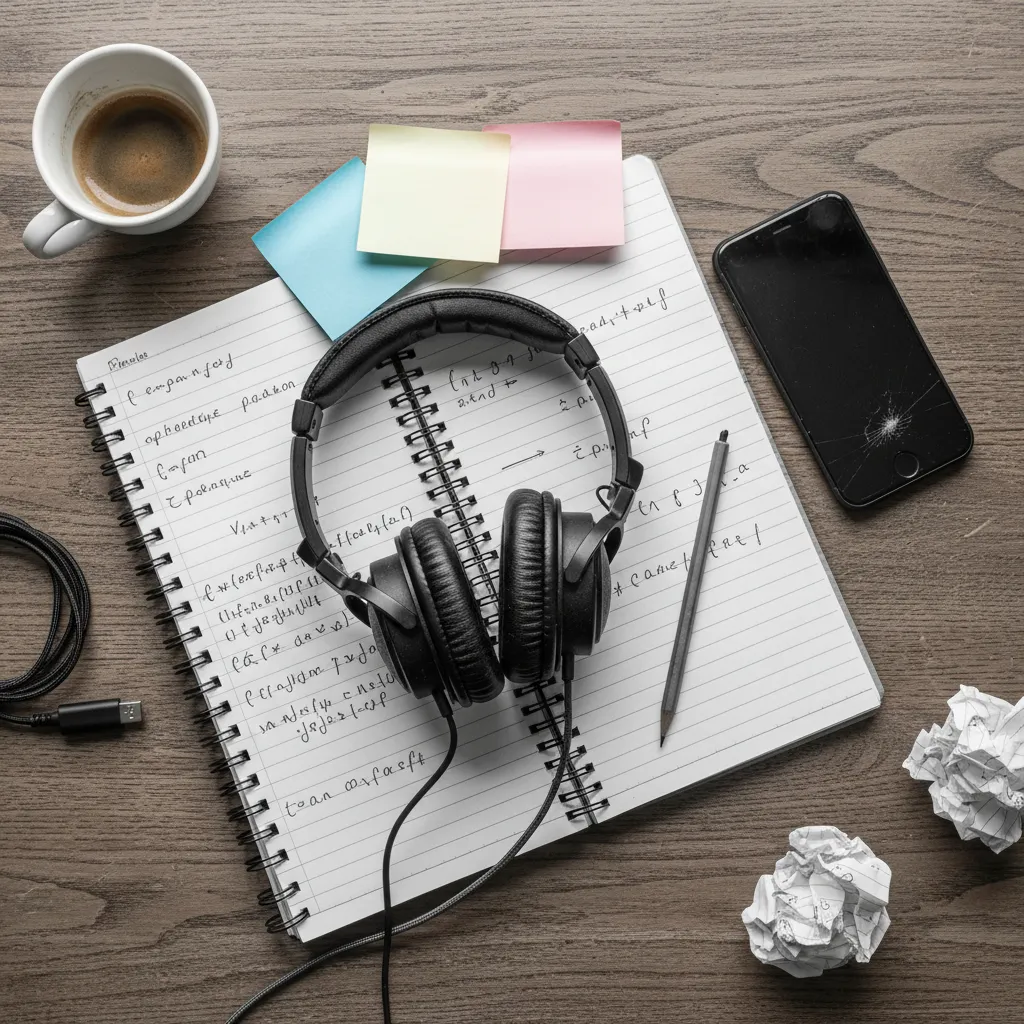
I've landed on a daily practice flow that takes about 15 minutes. It works. Here's the structure.
Step 1: Listen to Your Cloned Voice (3 minutes)
Pick one sentence or short passage in your target language. Listen to the AI-generated version in your voice three to five times. Don't speak yet. Just listen. Let your motor cortex build the map.
Step 2: Shadow the Clone (4 minutes)
Now speak along with the playback. Match rhythm first, then pitch, then individual sounds. Shadowing your own cloned voice feels strange at first. It stops feeling strange by day three.
Step 3: Record and Compare with Real Feedback (5 minutes)
This is where you switch to LingoTalk or a similar pronunciation AI. Record yourself speaking the same passage. Get phoneme-level feedback. Identify the specific sounds that still diverge from the target.
Step 4: Targeted Repetition (3 minutes)
Drill only the problem sounds. Not the whole sentence. Just the friction points. This is where the real gains happen, and it's where most people skip ahead too quickly.
Fifteen minutes. Every day. The compounding effect over four to six weeks is remarkable.
The Honest Limitations
I'd be a bad curator if I didn't flag the boundaries.
Voice cloning fluency tools don't teach you grammar. They don't build vocabulary. They don't help you understand fast native speech in a noisy room.
They do one thing: they give your brain an extraordinarily precise model of what you sound like at your target proficiency. That's a pronunciation hack, not a fluency hack. The distinction matters.
Also, the ethical landscape is still developing. Most reputable tools require explicit consent recordings and don't store voice data indefinitely. But read the privacy policies. Every time. I'm not negotiable on this point.
Where This Goes Next
The trajectory is clear. Within 12 months, expect real-time voice cloning — you speak in your native language, and you hear yourself in the target language with zero delay. That will collapse the feedback loop even further.
Expect LingoTalk and similar platforms to integrate cloning directly, so the auditory blueprint and the corrective feedback live in one seamless experience.
Expect the quality floor to rise dramatically. The clones will get better. The accent coverage will broaden. The price will drop.
This category is real, it's accelerating, and it works.
The Takeaway
If you're serious about pronunciation improvement in 2026, AI voice cloning deserves a place in your routine. Not as a replacement for structured practice, but as the missing sensory input your brain has been starving for.
Hear yourself at the finish line. Then use real-time feedback — like LingoTalk's speech analysis — to close the gap between imagination and reality.
Your voice already knows how to speak your target language. You just haven't heard it yet.
Ready to speak a new language with confidence?