
The 'False Beginner' Cure: How AI Pinpoints Your Forgotten Language Skills So You Never Start From Scratch Again
The most frustrating place to exist in the entire landscape of human education isn't a state of total ignorance; it is the agonizing purgatory of knowing something but being entirely convinced you know nothing.
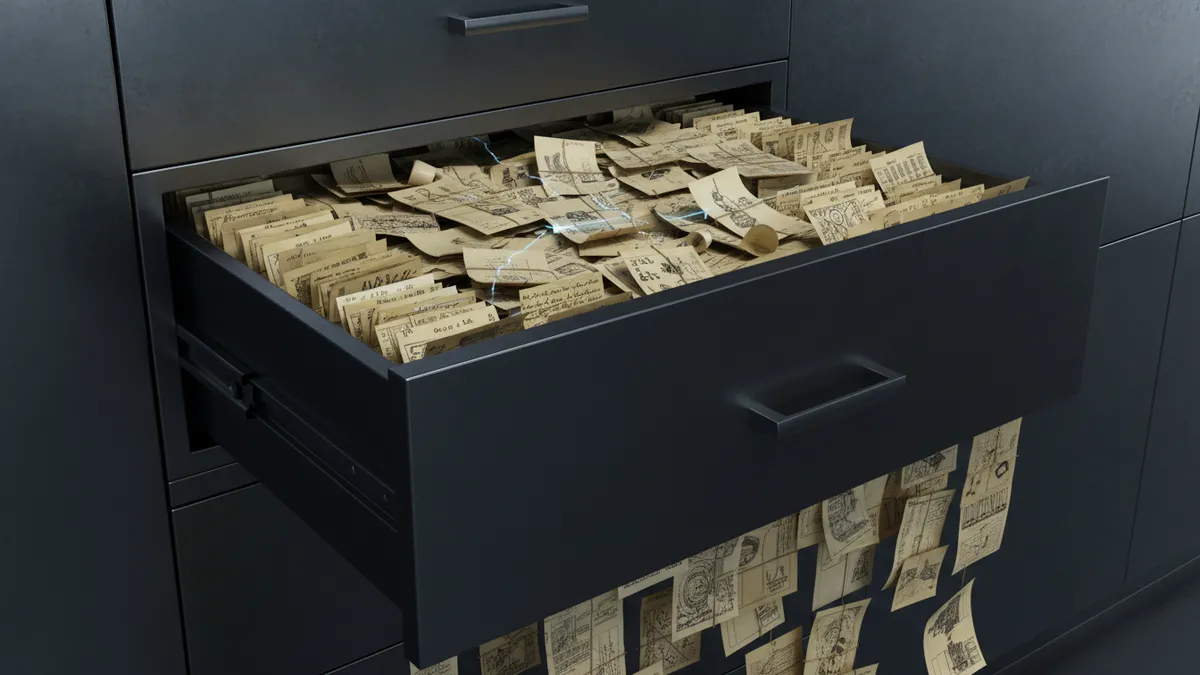
Human memory is a vast, echoing archive where we store decades of fleeting experiences, complex emotional responses, and half-mastered academic skills. We toss years of high school French or college Japanese into this dark void, assuming the vocabulary simply rots away into nothingness over time. We eventually decide to relearn a language, download a bright, gamified application, and are immediately forced to tap a cartoon apple to translate the phrase "Hello, how are you?" We sit there, staring at the glowing screen, feeling a profound, soul-crushing boredom as we drag the word hola to the word hello. But the truth is far more fascinating than we realize.
You absolutely do not have to start from scratch, because your brain is hiding a beautifully intricate web of dormant linguistic data, and today's AI language diagnostic tools are the high-powered flashlights designed specifically to find it.
The Fascinating Illusion of Forgetting
That feeling of utter blankness when you try to speak isn't a deletion of data; it is merely a broken retrieval pathway.
Language acquisition is a miraculous, messy biological process where tiny neurons wire together to attach highly abstract sounds to our physical, tangible reality. Over years of tedious classroom drills and textbook exercises, your adolescent brain built a sprawling, chaotic metropolis of grammar rules and vocabulary words. Then, inevitably, you passed the final exam, moved on with your life, and stopped practicing entirely. The neural roads leading to that linguistic metropolis grew over with thick weeds, making it seemingly impossible to recall how to ask for the bathroom or order a coffee.
Yet, if you happen to overhear a native speaker say the word baño while waiting for a train, a tiny, dusty synaptic switch flips on instantly in your temporal lobe. You didn't lose the language; you simply lost the map to get to it.
This exact neurological phenomenon is what linguists refer to as false beginner language learning. A true beginner is a blank slate, a traveler who has never even seen the country they are about to visit. A false beginner is a native who has simply been away from home for a very long time.
When we attempt to relearn high school Spanish as adults, our forgotten language skills don't resemble a cleanly erased chalkboard. Instead, they look like a block of Swiss cheese. You might possess an impeccable, deeply ingrained understanding of complex sentence structures, but you have completely forgotten the word for "window."
The Agony of the Traditional Reset
Because those neural pathways are merely overgrown and not actually destroyed, treating them like they do not exist is a recipe for absolute educational disaster.
The standard approach to adult language education is a rigid, linear, unyielding conveyor belt designed exclusively for that perfectly blank slate. We log into a new program, brimming with motivation to finally master that long-lost tongue, only to be fed the exact same primary-color flashcards we stared at when we were twelve years old. We endure hours of agonizingly slow, repetitive drills that insult our adult intelligence. We are forced to translate "the boy drinks water" fifty consecutive times before the software graciously permits us to see a single past-tense verb.
It is maddeningly inefficient. Time is the single most precious resource for any adult attempting to weave a demanding new habit into an already overflowing, chaotic schedule. We squeeze our practice sessions into fifteen-minute subway commutes, crowded waiting rooms, and those fleeting, exhausted moments just before sleep.
If we waste those precious, hard-won minutes reviewing the word for "cat," our motivation evaporates into thin air. We abandon the effort entirely, not because the language is too hard, but because the process of getting to the challenging part is unbearably tedious.
Enter the AI Language Diagnostic
But what if the software could actually see the invisible, microscopic architecture of your forgotten language skills?
Artificial intelligence has fundamentally altered how we interact with vast, unstructured datasets, and your brain's residual linguistic knowledge is the ultimate unstructured dataset. When you engage with a truly sophisticated system, it doesn't just lazily ask you a series of static, multiple-choice questions. It actively analyzes your hesitation times, your partial matches, your phonetic approximations, and your contextual leaps.
It watches, with mathematical precision, as you correctly identify a highly complex subjunctive verb but wildly fail to translate a basic household noun. It maps the exact, jagged contours of your unique linguistic Swiss cheese.

This is the precise magic we obsess over every single day at LingoTalk. We get genuinely, unapologetically excited about the granular details of cognitive retrieval. We know that a one-size-fits-all placement test is a blunt instrument, a hammer trying to do the work of a scalpel.
An AI language diagnostic, however, operates like a living, breathing cartographer. It probes the specific boundaries of your memory with surgical precision. It feeds you a slightly harder sentence, watches you stumble on a specific preposition, and instantly, brilliantly recalculates your entire curriculum in milliseconds.
How Intelligent Mapping Changes Everything
Mapping that cognitive cheese isn't just a neat technological party trick; it represents a completely different, infinitely superior paradigm for how we study.
Every single learner's memory decay curve is a highly individualized, entirely unique fingerprint. You might remember the exact gender of five hundred French nouns because your teacher made you sing a song about them, but you have absolutely no idea how to string them together into a coherent thought.
When you use a skip basics language app powered by adaptive AI, the algorithm identifies these bizarre, beautiful idiosyncrasies immediately. It silently bypasses the hundreds of lessons you implicitly understand, catapulting you directly into the exact sweet spot of your learning curve.
Psychologists call this the "zone of proximal development." It is that magical, highly productive psychological space where a task is just difficult enough to require deep focus, but not so difficult that it triggers frustration and despair.
When you are forced to repeat "hello," you are bored. When you are asked to debate philosophy in a language you haven't spoken in ten years, you are terrified. But when an AI gently bridges the exact gap between what you subconsciously remember and what you explicitly need to learn, you enter a state of pure, exhilarating flow.

Honoring Your Past Efforts
Staying consistently in that zone of flow is the entire secret to finally crossing the elusive fluency finish line.
The journey to mastering a new tongue is never a straight, newly paved highway; it is a winding, cyclical, beautifully messy path of discovery, forgetting, and joyous rediscovery. We owe it to ourselves to deeply honor the hundreds of hours of hard work our younger selves put into those stuffy classrooms, rather than casually throwing that effort away just because it feels temporarily inaccessible.
We must trust the remarkable biology of our own minds. We must trust that the foundations are still there, waiting quietly in the dark recesses of our synapses, perfectly preserved and ready to be reactivated.
All you need is the right spark to illuminate them. By letting an AI language diagnostic map your hidden strengths, you stop fighting your own memory and start leveraging it. You stop being a frustrated beginner, and you finally resume the journey you started all those years ago. At LingoTalk, we're ready to help you find exactly where you left off.
Ready to speak a new language with confidence?