
How to Learn Two Languages at the Same Time Using AI: The Smart Polyglot's Guide for 2026
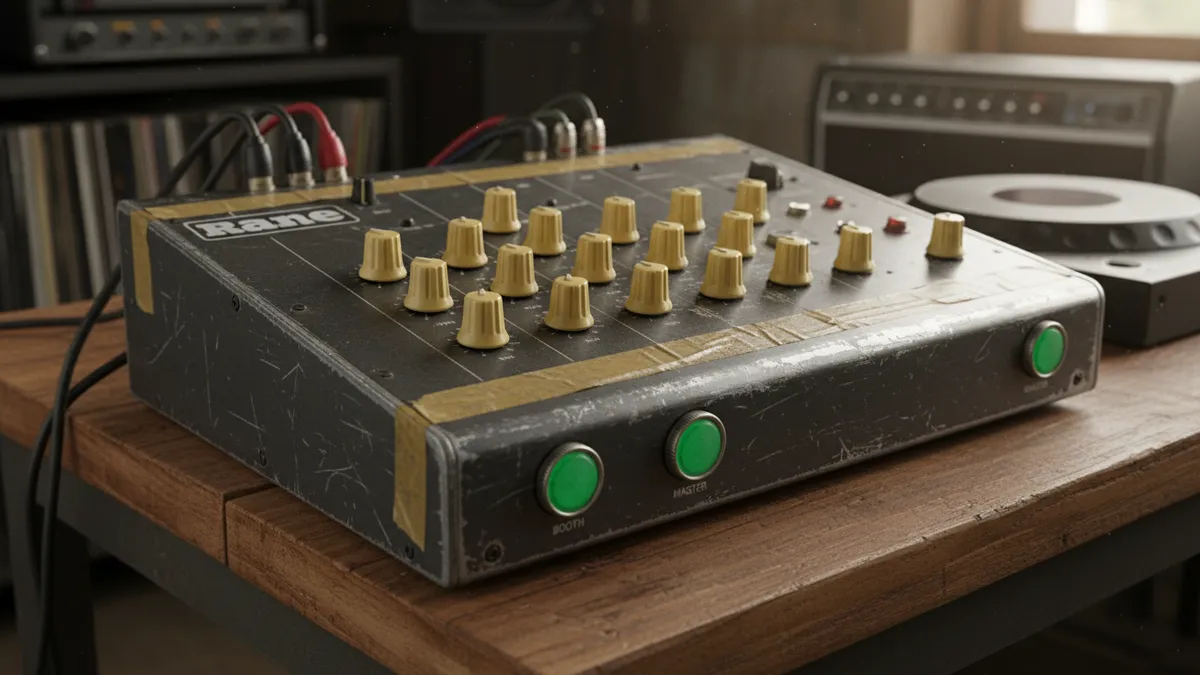
A DJ doesn't play two songs at the same time by cranking both to full volume and praying — they beatmatch, they EQ, they carve out frequencies so the bassline of one track doesn't collide with the bass of the other, they create a blend so seamless the dance floor never realizes a transition happened. Learning two languages at once is the same art, and most advice you'll find online essentially tells you to slam both faders up and hope for the best.
That's the real problem. Not motivation, not time management, not some mythical "language talent gene."
It's interference.
The Real Reason People Fail When They Learn Two Languages at Once
Here's the contrarian take nobody wants to hear: making a schedule is nearly useless for simultaneous language learning if your brain can't cleanly separate the two systems it's building. You can block Monday-Wednesday-Friday for Spanish and Tuesday-Thursday-Saturday for Korean, and six weeks in you'll still accidentally conjugate a Spanish verb with Korean sentence structure, or — more insidiously — your brain will quietly route new Korean vocabulary into the same neural filing cabinet as your Spanish vocabulary, creating retrieval chaos that feels like "I'm just bad at languages."
Linguists call this cross-linguistic interference, and it's the single biggest reason people abandon the project of learning multiple languages simultaneously, not because they lack discipline but because their study method has zero mechanism for preventing the bleed between Language A and Language B. Traditional flashcard apps, textbooks, even most tutors treat each language as an isolated silo, completely ignoring that your brain is one shared system processing both.
That's where AI changes everything — not by being a fancier flashcard, but by acting like that DJ, actively monitoring which frequencies are clashing and adjusting in real time.
Two Approaches to Parallel Language Learning: Brute Force vs. AI-Adaptive
Let's put these side by side, because the contrast reveals why one approach produces polyglots and the other produces burnout.
The Brute Force Method
The traditional way to learn two languages at the same time looks clean on paper: pick two languages, assign each to specific days or time slots, use separate apps or textbooks for each, review vocabulary independently, and rely on your own self-awareness to notice when interference creeps in. The underlying assumption is that discipline plus time equals results, and that your conscious mind can police the boundary between two emerging language systems while also trying to learn them.
It works — for about three to four weeks, which is roughly how long it takes for both languages to reach the complexity threshold where your brain starts taking shortcuts and cross-wiring similar-sounding words, overlapping grammar patterns, or confusable writing systems.
The AI Polyglot Method
The AI-adaptive approach starts from a fundamentally different premise: your brain will interfere with itself, that's not a bug to prevent but a signal to respond to. A parallel language learning AI monitors your performance across both languages simultaneously — not in isolation — and detects the early signatures of interference before you're consciously aware of them: response time slowdowns on words that share phonetic similarities across your two target languages, sudden accuracy drops in grammar patterns that have structural overlap, confusion clusters that emerge specifically after switching between languages.
Then it intervenes. Not with a generic "review more" notification, but with precision.
That's the whole game.

Three AI Mechanisms That Make Simultaneous Language Learning Actually Work
Let's break the DJ metaphor down into its component techniques, because each maps onto a specific AI capability that platforms like LingoTalk are building into the dual-language learning experience.
Adaptive Context-Switching (The Crossfade)
A DJ doesn't cut abruptly between tracks — they crossfade, choosing the exact moment when both songs are harmonically compatible. AI-powered context-switching does the same thing with your language sessions: instead of rigid "Spanish day / Korean day" blocks, the system dynamically decides when to switch you between languages within a session based on your current cognitive load, recent error patterns, and the specific material you're covering.
Sometimes it means spending 25 minutes in Spanish and then pivoting to Korean when your accuracy plateaus — not because you've failed, but because your brain is primed for contrast. Other times it means interleaving short bursts, three minutes of Korean listening comprehension between Spanish grammar drills, specifically because the total context shift forces your brain to build stronger language-identity tags on each system. The AI is reading your performance data and choosing the crossfade point that maximizes separation rather than blurring.
This is something no static schedule can do.
Smart Session Spacing (The EQ)
Just as a DJ carves out frequency space so two tracks don't mud up the mix, smart spacing carves out cognitive space between similar elements across your two languages. If you just learned the Spanish subjunctive and Korean has a grammatically analogous conditional mood coming up in your curriculum, a bilingual learning app with real AI doesn't naively serve both in the same week — it creates strategic temporal distance between confusable concepts, spacing them so the first has time to consolidate before the second arrives.
But here's where it gets interesting: for concepts that are different enough to benefit from contrast, the AI actually brings them closer together, because your brain learns distinction through comparison. The spacing isn't uniform — it's sculpted to the interference profile of your specific language pair.
Personalized Difficulty Balancing (The Gain Staging)
When you learn multiple languages simultaneously, one is almost always ahead of the other, and the gap creates its own interference problem — your stronger language becomes a crutch, a default setting your brain reverts to under pressure, which starves the weaker language of the struggle-based processing it needs to grow. AI difficulty balancing solves this by independently calibrating the challenge level in each language so that both produce the same optimal level of productive difficulty, even if the actual content complexity is wildly different.
In practice, this means your Spanish sessions might involve constructing complex past-tense narratives while your Korean sessions are still focused on basic sentence patterns — but both feel equally challenging, both demand the same cognitive effort, and your brain doesn't develop a preference for retreating into the easier one.
LingoTalk's approach to AI language learning with multiple languages leans heavily into this kind of balancing, treating your dual-language journey as one interconnected system rather than two separate subscriptions.
The 8-Week Dual-Language AI Sprint Plan
Enough theory. Here's a concrete framework for anyone ready to learn two languages at once using AI tools available in 2026.
Weeks 1–2: Foundation and Separation
- Daily commitment: 30 minutes total (split dynamically by AI, not by you)
- Focus: High-frequency vocabulary in both languages, with AI monitoring for phonetic and semantic overlap confusion
- Key rule: Let the AI choose your session split ratio — resist the urge to manually equalize time
- Goal: Build distinct "language identities" through accent exposure, unique cultural content, and differentiated session environments
Weeks 3–4: Structured Interleaving
- Daily commitment: 40 minutes total
- Focus: Basic grammar in both languages, introduced with AI-controlled spacing to avoid structural interference
- Key rule: Begin short within-session switches (AI-directed), training your brain's context-switching muscle
- Goal: Survive your first grammar overlap without confusion — this is the danger zone where most people quit
Weeks 5–6: Productive Contrast
- Daily commitment: 45 minutes total
- Focus: Intermediate vocabulary and sentence construction, with AI actively using cross-language contrast drills — "How would you say this differently in Language B?"
- Key rule: Embrace the comparison rather than avoiding it; AI ensures you're ready for it
- Goal: Start benefiting from the dual-language setup rather than merely surviving it
Weeks 7–8: Integration and Output
- Daily commitment: 45–50 minutes total
- Focus: Conversation practice, listening comprehension, and free production in both languages
- Key rule: AI conversation partners that switch languages mid-dialogue to stress-test your separation skills
- Goal: Demonstrate functional beginner-level competence in both languages with clean switching

Simultaneous Language Learning Tips That Actually Respect Your Brain
Beyond the sprint plan, a few principles separate successful AI-assisted polyglots from the frustrated masses:
Choose complementary, not similar, language pairs for your first dual attempt. Spanish and Portuguese will generate far more interference than Spanish and Japanese — different scripts, different phonetic systems, different everything means your brain has natural separation built in. Save the closely related pairs for when you've trained your switching ability.
Trust the AI's pacing more than your ambition. If the system holds you on basic Korean for a third week while advancing your Spanish, it's because your performance data shows that's the optimal path. The whole point of using a parallel language learning AI is that it sees patterns in your errors that your enthusiasm cannot.
Use environmental anchors to reinforce separation. Study Language A at your desk and Language B on the couch, or use different background music for each — these contextual cues give your brain extra filing signals that complement what the AI is doing computationally.
Measure interference, not just progress. The metric that matters most isn't "how many words do I know in each language" but "how often does Language A leak into my Language B sessions." AI tools track this automatically; pay attention to those reports.
The Polyglot's Real Edge in 2026
Here's the final contrarian thought: learning two languages at the same time isn't harder than learning one. It's harder to do badly, because the consequences of poor methodology are doubled. But with AI eliminating interference through adaptive context-switching, intelligent spacing, and difficulty balancing, the dual-language learner actually has a structural advantage — the constant contrast between two systems deepens your understanding of both in ways monolingual study never can.
The DJ who mixes two tracks doesn't just play music. They create something neither song could be alone.
If you've been waiting for the technology to catch up to your ambition, 2026 is the year. LingoTalk's AI-powered approach is built for exactly this kind of multi-language journey — not as an afterthought bolted onto a single-language app, but as a core design principle. Start your dual-language sprint, trust the algorithm's crossfade, and let interference become your signal instead of your enemy.
Ready to speak a new language with confidence?