

Why Bother Learning a Language When AI Can Translate Instantly? The Case for Fluency in 2026
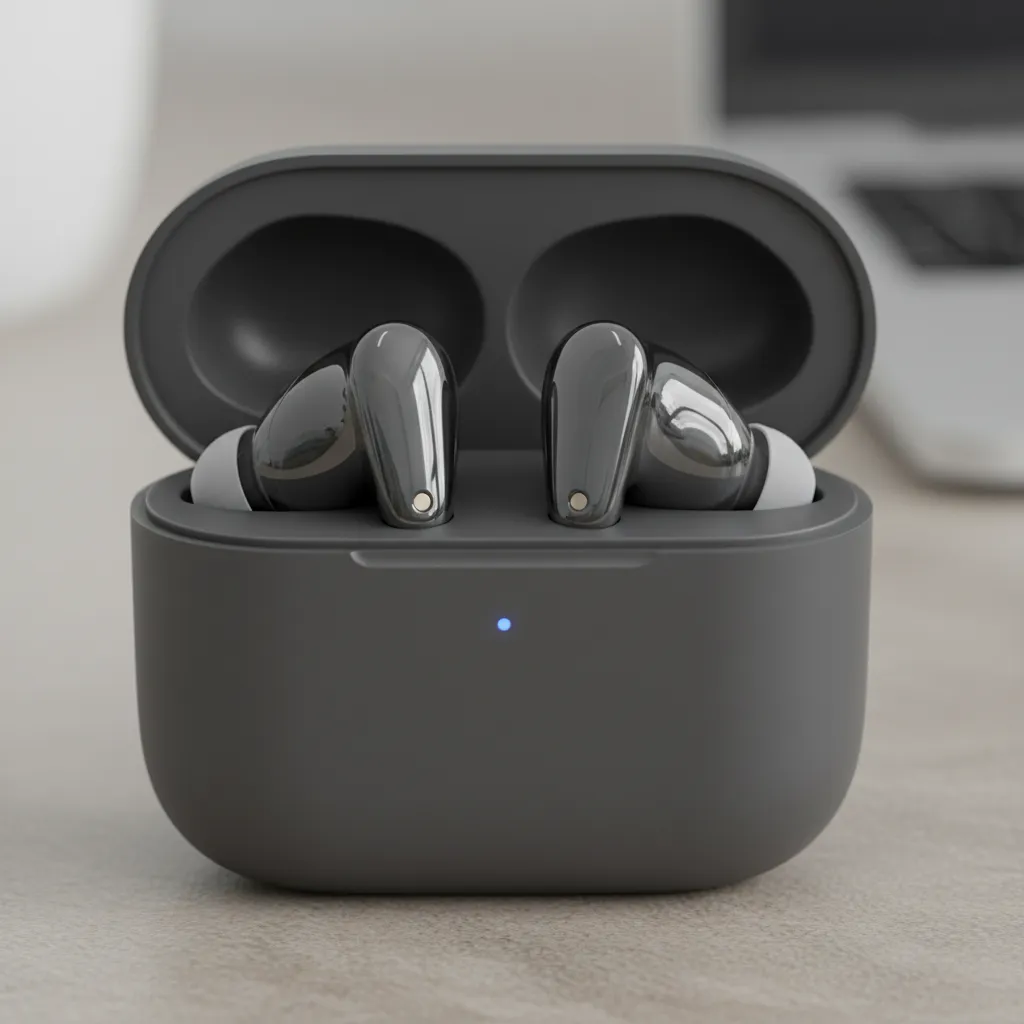
Picture it. 2028 maybe. Or next Tuesday, given the way Silicon Valley burns through venture capital to solve problems we didn't know we had. You are sitting in a cramped, dimly lit tapas bar in Madrid. You are wearing sleek real-time translation earbuds. They cost more than your transatlantic flight.
The waiter speaks. A pleasant, slightly robotic, completely sterilized voice whispers the English translation directly into your brain before his lips even stop moving. You reply in English. Your phone barks flawless, accent-perfect Spanish back at him. He nods. He writes it down. He brings the patatas bravas.
Transaction complete. Magic, right?
The friction of the human experience, completely eliminated. Except you didn't make a friend. You didn't catch the heavy sarcasm in his voice when he mentioned the local soccer team's latest disaster. You didn't hear the exhaustion of a twelve-hour shift masked by local slang. You just pushed buttons on a human vending machine.
Let's rewind. To right now. To the existential panic gripping the language industry. The endless, breathless think pieces asking is language learning dead because some tech giant released a new demo reel. I have seen every Babel fish promise since 2010. I have tested the gadgets. I have read the press releases. They finally work for buying train tickets. They still absolutely suck for falling in love.
When we debate AI translation vs learning, we are usually having the wrong conversation. We treat language like a math problem to be solved. Data in. Data out. We assume the goal of speaking to another human being is simply the transfer of raw data. It isn't. If you want to know why learn a language in 2026, you have to accept a hard, pragmatic truth.
The world is splitting into two entirely different types of communication. Transactional. And Relational.
The Transactional Illusion
Let's give the algorithms their due. AI is going to win the transactional game. It already has. Let's not pretend otherwise. The tech bros are right about one thing—nobody needs to spend four years studying French just to find a bathroom in Paris.
What the silicon actually gets right
Here is where you should absolutely let the machine do the talking.
- Buying things. Ordering a flat white in Tokyo. Negotiating a cab fare in Rome. Buying a train ticket to Kyoto. The machine does this perfectly because buying coffee does not require a soul. It requires a price and a product.
- Getting directions. Finding the nearest hospital when you twist your ankle. Locating the obscure train platform. Pure information exchange. The faster, the better.
- Reading menus. Point your camera. Get the ingredients. Avoid the shellfish allergy that will put you in anaphylactic shock. Translation tech saves lives here.
- Bureaucracy. Navigating foreign tax forms. Reading immigration websites. The dry, lifeless text of governments was practically made for AI to digest.
If your entire goal in traveling is to consume goods and services without friction, then yes, buy the earbuds. You are done. You can stop reading. Have a nice, perfectly insulated trip.
The Case for Fluency in 2026: Relational Reality
But friction is where the good stuff actually happens. Human connection language is not about information exchange. It is about vulnerability. It is about the shared effort of reaching across a cultural divide and saying, "I am trying to meet you where you are."
Have you ever tried to be funny through a translator app? It is agonizing. You tell the joke. You wait. The machine processes. The machine speaks. The other person politely smiles. The timing is dead. The rhythm is gone. The shared humanity is reduced to a buffering icon. Humor is jazz. Translation apps are sheet music played by a metronome.
Where the algorithms completely fail
Here is what breaks when you outsource your voice to a microchip.
- Building Trust. You do not close a major business deal through an earpiece. Trust is built in the micro-expressions. The shared pauses. The visible effort of meeting someone in their own cultural space. When you speak their language, even badly, you signal respect.
- Empathy and Grief. Comforting a grieving friend. Celebrating a massive, life-changing win. A robotic voice saying "I am sorry for your loss" is dystopian. It is chilling. It strips the warmth from the very moment warmth is needed most.
- Dating and Romance. Imagine leaning in for a first kiss but having to wait for Siri to translate the mood. Imagine trying to flirt while holding a glowing screen between your faces. No thanks. Romance requires presence. Tech demands your attention.
- Reading the Room. Language carries the unspoken rules of a culture. The hierarchy. The respect. The deep, messy history. Translation strips the context and leaves only the text. You get the words, but you miss the music.
Your Brain on Syntax (The selfish reason to learn)
Let's strip away the romance for a second. Let's look at the cold, hard biology.
The language learning cognitive benefits are simply too massive to outsource to a cloud server. Your brain is a muscle. It is a lazy muscle that will happily atrophy if you stop giving it complex problems to solve. Outsourcing your cognition to AI is like buying a forklift and wondering why your biceps are shrinking.
The biological ROI of fluency
- Neuroplasticity. Forcing your adult brain to map entirely new neural pathways prevents cognitive decline. It builds cognitive reserve. It is literal pushups for your gray matter. You don't learn Spanish just to speak Spanish. You learn it to keep your brain elastic.
- Perspective Shifting. Learning German makes you think differently about compound concepts. Learning Japanese forces you to understand social hierarchy before you even open your mouth to say hello. You do not just learn new words for the same old things. You learn entirely new ways to exist in the world.
- The struggle is the feature. We are obsessed with eliminating effort. Silicon Valley sells us the dream of zero friction. But the effort of remembering a verb conjugation, the slight panic of searching for a noun, the triumph of finally being understood—that is exactly what keeps your mind sharp and your spirit engaged.
Stop Using AI to Translate. Start Using It to Learn.
This is where the skeptics and the doomsayers get it completely wrong. They think because translation tech is getting better, the learning tech is useless. It is the exact opposite.
AI is not your replacement. It is your ultimate, infinitely patient, perfectly tailored tutor.
At LingoTalk, we stopped pretending that language learning should look like a 1990s textbook. We also know that a shiny translation app won't help you make friends in a dive bar in Bogota or impress your new in-laws in Seoul. So we built the bridge. We use the exact same advanced AI that powers those translation earbuds, but we reverse the flow. Instead of doing the work for you, it trains you to do the work yourself.
How pragmatic learners use LingoTalk in 2026
- Roleplaying the real world. You do not need to practice saying "the apple is red" like a toddler. You need to practice arguing with a landlord in Paris. You need to practice pitching a client in Berlin. AI lets you simulate high-stakes, hyper-specific conversations with zero real-world consequences.
- Instant feedback, zero judgment. The machine does not care if you mess up the subjunctive ten times in a row. It does not sigh. It does not check its watch. It just corrects you. Patiently. Endlessly. Until you get it right.
- Hyper-personalized vocabulary. Forget learning the words for farm animals unless you are actually a farmer. An AI tutor learns what you care about. It analyzes your goals and builds your curriculum around your actual life, your actual career, and your actual hobbies.

The Final Verdict on Fluency
So, why bother? Why spend hundreds of hours rewiring your brain when a piece of plastic and a monthly subscription can do the heavy lifting?
Because you are not a tourist in the human experience. Not really.
You want the grit. The inside jokes. The feeling of walking into a crowded room in a foreign city and actually belonging there instead of just passing through like a ghost. Transactional tech will make travel easier. It will make global business faster. It will completely remove the panic of a lost passport in a country where you don't speak the language. Celebrate that. Use it. Pragmatism dictates we use the best tools available for the boring stuff.
But when you want to actually connect? When you want to look someone in the eye and know that they truly understand you, and you truly understand them?
There is no app for that. There is no earbud that can translate a soul. There is only the beautiful, messy, frustrating, incredibly rewarding process of learning to speak their language.
Drop the translation crutch. Pick up LingoTalk. Do the actual work. The human connections waiting for you on the other side are worth every single dropped conjugation and forgotten vocabulary word.
Ready to speak a new language with confidence?