Is Your AI Language Tutor Spying on You? What Happens to Your Voice Data and How to Protect Your Privacy in 2026
I was three months into my Korean pronunciation drills when it hit me. Eleven minutes a day, every day, speaking into an app — correcting my ㅂ sounds, fumbling through honorifics, occasionally muttering profanity when I butchered a sentence for the fifth time. That's roughly 16 hours of raw voice recordings. Of me. Sitting on a server. Somewhere.
Where, exactly? I had no idea.
So I did what any restless, mildly paranoid language nerd would do: I read the privacy policies. All of them. Seven major AI language apps, fine print and all. What I found ranged from surprisingly transparent to genuinely alarming — and it changed how I choose every language tool I use.
What AI Language Apps Actually Collect From You
Let's get specific. Most learners assume these apps store a lesson score, maybe some vocabulary stats. That's a fraction of it.
The typical AI language tutor in 2026 collects your raw voice recordings (often retained indefinitely for "model improvement"), full conversation transcripts, error pattern data showing exactly where your grammar and pronunciation break down, session timestamps, device identifiers, and sometimes even ambient audio captured before you finish speaking. One app I audited retained spectral voice data — essentially a biometric voiceprint — without ever using the word "biometric" in its terms of service. Your error patterns alone paint an intimate cognitive portrait: what confuses you, how you learn, where you hesitate. That's valuable data. Not just for teaching you Spanish.
For training the next model. For selling aggregate insights. For purposes listed fourteen pages deep in a document no human was ever meant to read.

The 2026 Regulatory Shake-Up: EU AI Act and California SB 243
Here's where things get interesting. And by interesting, I mean: the rules just changed.
The EU AI Act reaches full enforcement in August 2026, and it classifies certain AI systems that interact with people — including conversational AI tutors — under specific transparency and data governance obligations. If an AI language app operates in the EU, it must now clearly disclose when a user is interacting with an AI system, provide meaningful information about how data is processed, and meet stricter requirements around high-risk categorizations if the tool is used in educational contexts. Educational AI sits in a sensitive zone under this Act. The implications for AI language learning data security are enormous.
California's SB 243, meanwhile, targets AI companion chatbots directly — and many AI tutors blur the line between "educational tool" and "companion." The bill introduces data minimization requirements, explicit consent frameworks for voice recording in AI apps, and — critically — provisions around minors. If a teenager is using an AI tutor to prep for a language exam, the protections are now significantly tighter.
I tested compliance firsthand. Downloaded three popular apps while connected through EU-based servers. Only one surfaced a clear AI interaction disclosure on first launch. The others? Silent.
What I Found When I Actually Read the Privacy Policies
I'll be honest: this part was tedious. And revealing.
App one — a major player with over 50 million downloads — stated that voice recordings could be "shared with third-party partners for research purposes." No opt-out mechanism visible in the settings. App two used the phrase "anonymized voice data" but defined anonymization so loosely that, paired with session metadata, re-identification would be trivial for anyone with basic data science skills. App three was better. Explicit retention limits. Clear deletion process. A toggle to disable voice storage entirely.
The pattern was clear: the apps spending the most on marketing spent the least on privacy architecture.
Three out of seven had no accessible data deletion request process — a direct tension with both GDPR and the EU AI Act's transparency mandates. Two stored data on servers in jurisdictions with minimal data protection frameworks. One couldn't tell me where my data was stored at all when I emailed their support team.
Fragment of a response I got: "We take privacy seriously and adhere to all applicable regulations." No specifics. No jurisdiction. No retention timeline. Just vibes.
Voice Data Is Biometric Data — And That Matters
This is the part most learners miss entirely.
Your voice is not just audio. It's a biometric identifier — as unique as a fingerprint, as persistent as your face. When an AI language app records you practicing French conjugations, it captures vocal patterns that can identify you across platforms, across contexts, potentially for years. Several U.S. states, including Illinois under BIPA, already classify voiceprints as biometric data requiring explicit, informed consent before collection. The EU AI Act reinforces this framing.
So when an app says it collects "voice recordings for pronunciation feedback" — is it also extracting a voiceprint? Is that voiceprint stored separately? Is it shared? These are not paranoid questions in 2026. They're essential ones.
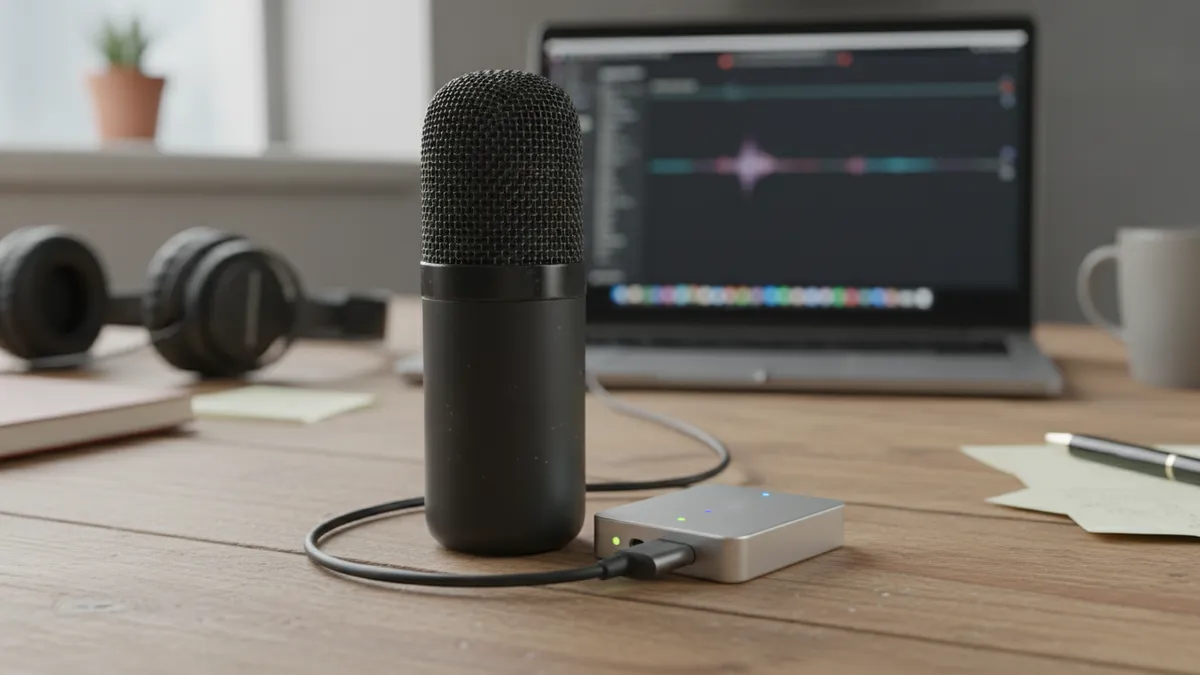
I ran an experiment. I used one AI tutor's data export feature (the only one among seven that offered it) and downloaded everything they had on me. Forty-seven audio files. Twelve conversation logs. A JSON file mapping my "learner profile" with error tendency scores across grammar categories. All from just three months of casual use.
Forty-seven recordings of my voice. Just sitting there.
Your Practical Privacy Audit Checklist for AI Language Apps
Enough problems. Let's talk solutions. Here's the checklist I built for myself — and now use every time I evaluate a new AI language learning tool.
1. Read the Data Retention Policy First
Before you even sign up. How long does the app keep your voice recordings? Is there a defined retention period, or is it "indefinitely"? If you can't find this information within five minutes, that is your answer.
2. Check for a Voice Data Opt-Out
Does the app let you use pronunciation features without storing your audio server-side? Some tools process voice locally on-device and never upload recordings. That's the gold standard for AI language app privacy. At LingoTalk, this is something we think about constantly — privacy shouldn't be a premium feature.
3. Look for a Data Export and Deletion Option
Can you download everything the app has collected on you? Can you delete it? Under GDPR and the EU AI Act, this is a legal right for EU users. But regardless of where you live, a trustworthy app should offer it voluntarily.
4. Verify Where Data Is Stored
Server jurisdiction matters. Data stored in the EU falls under GDPR. Data stored in certain other jurisdictions may have weaker protections. If the app doesn't disclose server locations, ask.
5. Examine Third-Party Sharing Clauses
The phrase "trusted partners" should raise your eyebrows. Who are they? For what purpose? Is the sharing necessary for the service, or is it monetization wearing a trench coat?
6. Check the App's AI Act Compliance Disclosures
As of August 2026, any AI language app serving EU users should have explicit transparency documentation. If it doesn't exist, the app is either non-compliant or hasn't updated — both red flags.
7. Test the Support Team
Email them a specific privacy question before committing. How quickly and clearly they respond tells you everything about how seriously they treat your data.

What Good AI Language Learning Privacy Looks Like
It's not all bleak. I've seen tools get this right.
The best AI language apps in 2026 process voice locally, transmit only anonymized feature vectors (not raw audio) when cloud processing is necessary, set automatic deletion windows of 30 days or less, and give you granular controls — not a single "I agree" checkbox hiding forty permissions. They treat your voice data the way a good teacher treats a confidence shared in class: with care, and with the understanding that it was never theirs to keep.
At LingoTalk, we believe your language journey belongs to you — including the data that comes with it. We're building with privacy-by-design principles not because regulators told us to, but because we're language learners ourselves. We know what it feels like to speak vulnerably in a new language. That vulnerability deserves protection.
The Takeaway: Speak Freely, But Choose Wisely
You shouldn't have to choose between getting better at a language and giving up your biometric data to an opaque pipeline. In 2026, you don't have to.
The EU AI Act and California's SB 243 are raising the floor. But legislation is slow, and enforcement is slower. Your best protection is still your own diligence — reading policies, asking questions, using the audit checklist, and choosing tools that respect you as a person, not just a data point.
I still practice Korean every day. I still talk to AI tutors. But now I know exactly where my voice goes when I do. That knowledge didn't make me more paranoid. It made me more free.
Speak boldly. Just know who's listening.
Ready to speak a new language with confidence?