
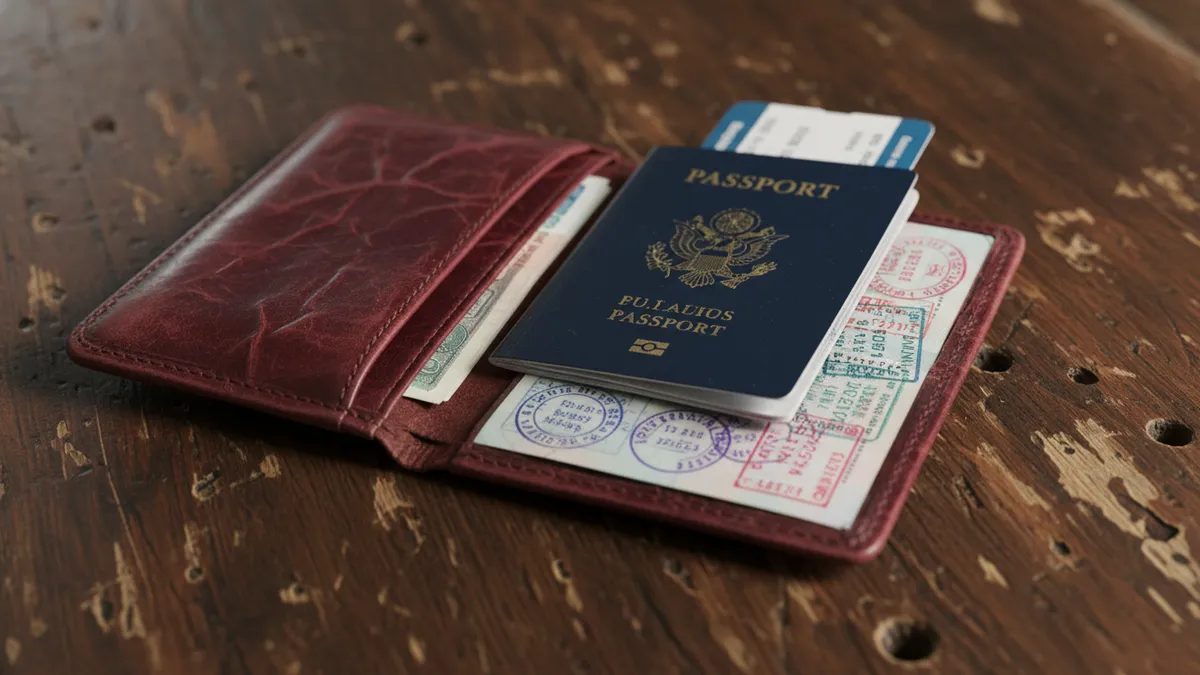
Countries Are Raising Visa Language Requirements in 2026 — How AI Language Apps Help You Reach B2 Fluency Fast
Have we checked the requirements lately?
Not the requirements from last year. Not the ones our friend told us about over coffee. The ones that changed — quietly, officially — while we were still studying at the old standard.
Because here's what happened. In January 2026, the UK raised the English language requirement for its Skilled Worker visa from B1 to B2 on the CEFR scale. And the UK isn't alone. Several countries have tightened their visa language requirements in 2026, and if we're planning to work, study, or settle abroad, the goalposts have moved.
Let's figure this out. Together.
What Changed — and Why B2 Is the New Baseline
The shift feels sudden. It isn't.
Governments have been signaling for years that language proficiency expectations would rise. The UK's move to require B2 English for its Skilled Worker visa formalized what policy analysts had predicted — that a B1 level, while functional, doesn't meet the communication demands of today's professional workplaces.
B1 means we can handle familiar situations. Travel conversations. Basic workplace exchanges.
B2 means something different. It means we can argue a point. Follow a complex meeting. Write a report that doesn't need someone else to rewrite it. The gap between B1 and B2 is — honestly — where language stops being survival and starts being participation.
And that's exactly what immigration systems now want to verify.
The Global Landscape: Who Else Is Tightening Work Visa Language Requirements?
The UK grabbed headlines, but it's part of a broader pattern.
Here's where things stand in 2026:
- United Kingdom — Skilled Worker visa now requires CEFR B2 English (up from B1). Applies to all new applications from January 2026.
- Canada — Express Entry continues to heavily weight language scores. Higher CLB benchmarks are being discussed for certain NOC categories.
- Germany — The new Skilled Immigration Act provisions increasingly tie visa types to B1–B2 German, depending on the profession. Healthcare roles already require B2.
- Netherlands — Civic integration requirements post-arrival now lean toward B1 with faster timelines, pushing applicants to arrive at higher levels.
- Australia — Points-based system rewards "superior" and "proficient" English more aggressively, making anything below a strong B2 equivalent a competitive disadvantage.
The message across all these systems is consistent. Language proficiency isn't a checkbox anymore. It's a gatekeeper.

The B1-to-B2 Gap: Why It Feels So Hard
Let's be honest about something.
We've all hit that plateau. The one where we understand most of a conversation but lose the thread in the middle. Where we can write an email but it takes forty-five minutes and three drafts. Where we pass B1 comfortably and then — nothing. Weeks of study. No visible progress.
This is normal. And understanding why it's normal helps.
The jump from B1 to B2 isn't about learning more words. It's about learning to do more with words. B2 requires:
- Sustained, coherent argumentation — not just expressing opinions but structuring and defending them.
- Nuanced comprehension — catching tone, implication, what's not being said.
- Flexibility — shifting register between formal and informal contexts without thinking about it.
- Speed — processing language at a pace that doesn't create awkward silences in real conversations.
Traditional study methods — textbooks, grammar drills, vocabulary lists — got us to B1. They won't carry us to B2. Not in 90 days. Not with a visa deadline.
We need a different approach.
How AI Language Learning Changes the B1-to-B2 Timeline
Here's where things get interesting.
AI-powered language apps have fundamentally changed what's possible for language proficiency test preparation. Not because AI is magic. Because it solves three specific problems that used to make the B1-to-B2 jump so painfully slow.
Problem 1: Practice Without a Partner
B2 fluency requires speaking. A lot of speaking. But most of us don't have a patient native speaker available for an hour every evening.
AI conversation partners — like the ones built into LingoTalk — simulate real dialogue. They adapt. They challenge. They don't get tired of us rephrasing the same sentence four different ways at 11 PM.
This isn't about replacing human interaction. It's about filling the gap between our Tuesday evening language exchange and — every other moment of the week.
Problem 2: Generic Study Plans
A textbook doesn't know we're strong in reading but weak in listening. It doesn't know we need B2 English for a UK visa application due in April. It doesn't know we already understand past perfect but consistently mess up conditional structures.
AI adapts the CEFR B2 study plan to our gaps. LingoTalk's approach specifically maps weaknesses against CEFR descriptors, then prioritizes what will move us from B1 to B2 fastest — not what comes next in a chapter sequence.
Problem 3: Feedback That's Too Slow
In a classroom, we might wait a week for corrected writing. In real life, nobody corrects us at all — they just look slightly confused and move on.
AI feedback is immediate. Pronunciation analysis, grammar correction, vocabulary suggestions — all in the moment, while the context is still fresh. This compression of the feedback loop is what accelerates fluency.

A 90-Day AI-Powered Study Plan to Reach B2
Let's get concrete. If we're starting at a solid B1 and need to reach B2 in 90 days — because a visa deadline doesn't negotiate — here's a framework.
Weeks 1–3: Diagnose and Build Foundations
- Take a placement diagnostic. LingoTalk offers CEFR-aligned assessments that pinpoint exactly where we fall between B1 and B2 across all four skills.
- Daily AI conversations: 20 minutes. Focus on familiar topics but push for longer, more structured responses. No one-word answers. We narrate. We explain. We justify.
- Listening input: 30 minutes. Podcasts, news clips, anything authentic at a B2 level. AI tools can help us shadow and check comprehension in real time.
- Grammar focus: conditional structures, reported speech, passive voice in context. Not worksheets — integrated into speaking practice.
Weeks 4–6: Expand and Complicate
- Daily AI conversations: 30 minutes. Shift to unfamiliar topics. Current events. Abstract questions. "What would you change about your city's public transport?" — the kind of prompt that B2 exams love.
- Writing practice: 3 sessions per week. AI-assisted essay writing with immediate feedback on coherence, cohesion, and range of vocabulary.
- Vocabulary strategy: collocations over individual words. Not "significant" — but "a significant increase," "significant progress," "raise significant concerns." AI tools excel at drilling these patterns.
Weeks 7–9: Simulate and Stress-Test
- Mock speaking tests: twice weekly. LingoTalk's AI speaking practice can simulate IELTS, PTE, or LanguageCert exam formats, giving scored feedback.
- Timed reading and listening exercises. Speed matters at B2. We practice under time pressure.
- Error journal review. AI tracks our recurring mistakes. We spend 15 minutes daily reviewing patterns — the errors we make when we're tired, when we're rushing, when we think we know the answer.
Week 10–12: Refine and Rehearse
- Full practice tests under exam conditions. Complete simulations.
- Targeted drilling on weak spots. The AI has enough data by now to know exactly where we lose marks.
- Reduce study intensity slightly in the final week. Fatigue is real. We consolidate rather than cram.
This plan assumes 60–90 minutes of daily practice. Not all of it at a desk. AI apps make it possible to practice speaking during a commute, review vocabulary during lunch, run through listening exercises while cooking.
The 90 days are aggressive but achievable. We know because — we've seen people do it.
Which Language Proficiency Tests Meet Visa Requirements?
A quick note, because this trips people up.
Different countries accept different tests. For the UK Skilled Worker visa at B2 level, accepted tests include IELTS for UKVI, LanguageCert, PTE Academic, and others on the approved SELT list. Canada uses IELTS and CELPIP. Germany typically recognizes Goethe-Zertifikat and telc.
Always — always — check the specific approved test list for our target visa. Preparing beautifully for the wrong exam is a mistake we only need to make once.
LingoTalk's practice modules align with multiple major test formats, which helps if we're applying to more than one country or keeping our options open.
So — Have We Checked the Requirements Lately?
That question we started with. It lands differently now.
Because the answer isn't just "yes, things changed." The answer is that the global direction is clear — visa language requirements in 2026 and beyond will keep rising. B2 isn't an unusually high bar. It's becoming the standard bar. For skilled work. For long-term residency. For participation in a society that expects us to — actually participate.
The good news — and this is the part that matters — is that the tools have caught up to the challenge. AI language learning for visa preparation isn't a shortcut. It's a smarter path. One that adapts to us, meets us where we are, and compresses months of scattered study into focused, feedback-rich practice.
We've been where this feels overwhelming. Staring at a deadline, a test registration, a visa form — wondering if there's enough time.
There is. Start the diagnostic. Build the plan. Show up for 90 days.
The requirements changed. We can change faster.
Ready to speak a new language with confidence?