
How AI Is Finally Making It Possible to Learn American Sign Language From Home — The NVIDIA-Backed ASL Revolution of 2026
Here's a number that should stop you cold: 90% of deaf children are born to hearing parents. Most of those parents can't sign. Think about that — the vast majority of deaf kids grow up in homes where nobody speaks their most natural language. While AI-powered apps have spent the last decade teaching millions of people Spanish, Mandarin, and French from their couches, American Sign Language — used by over 11 million deaf and hard-of-hearing Americans — got almost nothing. Until now. In early 2026, NVIDIA launched Signs, a webcam-based AI platform built with the American Society for Deaf Children, and it finally cracks the problem that kept ASL out of the app-learning revolution.
The problem was never motivation. It was physics.
Why Learning ASL Online Was Nearly Impossible Before AI
You want to learn Spanish from home? Record yourself speaking, let an algorithm analyze your pronunciation, get feedback. Done. Want to learn ASL from home? You need someone to watch your hands in three-dimensional space, judge the angle of your wrist, the curl of your fingers, the position of your elbow relative to your shoulder — and tell you, in real time, what's off. No audio file to analyze. No text to parse. Just complex, spatial, full-body movement.
That's why every previous attempt at a sign language learning app felt like watching YouTube tutorials with a quiz bolted on. You could memorize the shape of a sign. You had zero way of knowing if you were actually doing it right. Imagine learning to play guitar by only watching someone else's hands and never hearing yourself play. That's what online ASL learning was.
So what changed? Computer vision got absurdly good, absurdly fast.
How NVIDIA Signs Actually Works: The Tech Behind Webcam Feedback
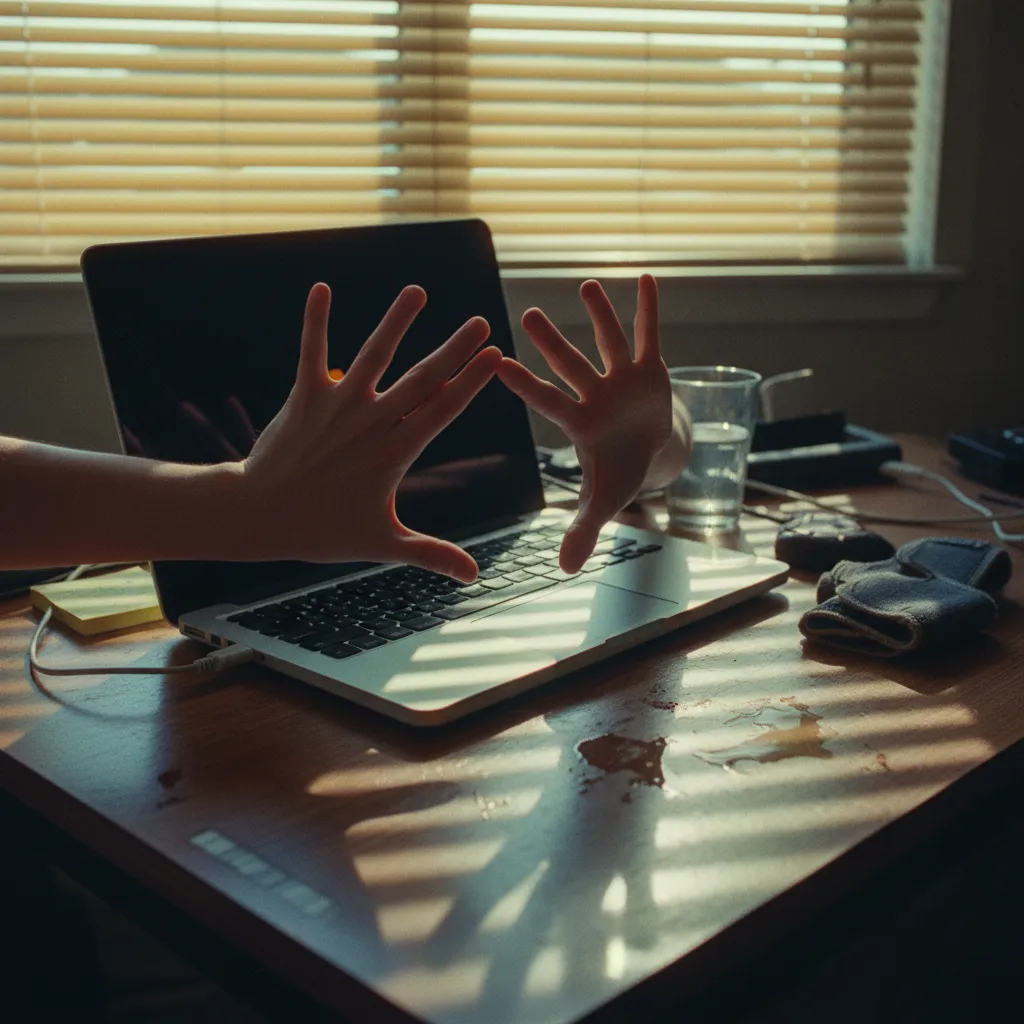
The NVIDIA Signs ASL platform does something that would have been science fiction five years ago: it uses your laptop or phone camera to build a real-time 3D model of your hands, arms, face, and upper body — then compares your movements against thousands of native signer recordings to give you instant, granular corrections.
Let's get into the weeds because the details matter here.
The system layers three AI models on top of each other. First, a pose-estimation model maps 21 skeletal points on each hand, plus arm and shoulder joints, at 60 frames per second. Second, a facial landmark detector tracks your eyebrows, mouth shape, and head tilt — because in ASL, facial expressions aren't optional decoration, they're grammatical. Raise your eyebrows and you've turned a statement into a yes-or-no question. Miss that, and you're speaking broken ASL. Third, a classification model trained on over 300,000 video clips from native Deaf signers evaluates whether your combined hand shape, movement path, and facial grammar match the target sign.
The result? You sign "thank you" into your webcam. The app highlights your thumb angle in yellow — close but slightly off. It overlays a translucent 3D avatar showing the correct position. You adjust. Green. Move on.
That feedback loop — try, see the gap, correct, try again — is what turns passive video-watching into actual skill acquisition. It's the same principle behind every effective language learning tool, from pronunciation coaches to flashcard spacing algorithms. The difference is that AI sign language recognition finally brings it to a visual-spatial language.
Why ASL Deserves the Same AI Revolution as Spanish or Mandarin
Here's where we zoom out. American Sign Language is not "English with your hands." It has its own grammar, its own syntax, its own regional dialects. Linguists classify it as a full, independent language — as complex and expressive as any spoken one. Yet for decades, the language-learning industry treated it as a niche.
The numbers say otherwise. ASL is the third most studied language at American universities. Enrollment in ASL courses has surged over 200% in the past two decades. Demand is massive. Supply of qualified instructors? Nowhere near enough. A single semester of in-person ASL classes can cost hundreds of dollars and require commuting to a campus twice a week.
AI sign language learning doesn't replace Deaf instructors and community — nothing replaces immersion with native signers. But it solves the access bottleneck. A hearing parent in rural Montana, up at 2 AM with a newly diagnosed infant, can now open an app and start learning the language their child needs. That's not a convenience feature. That's a lifeline.
At LingoTalk, we've always believed language learning should meet people where they are — across spoken languages, across borders, across ability. The emergence of platforms like NVIDIA Signs signals that the industry is finally catching up to what should have been obvious: if AI can teach you tonal pronunciation in Cantonese, it can teach you handshape precision in ASL.
Inside the 3D Avatar Instruction Model
Let's drop back down to the technical layer, because the avatar system is genuinely clever.
Older sign language apps showed you flat video of a human signer. The problem? You're watching a mirror image, the angle is fixed, and you can't rotate the view to see what the hand looks like from the side. NVIDIA Signs replaces pre-recorded video with a photorealistic 3D avatar powered by their Omniverse rendering engine.
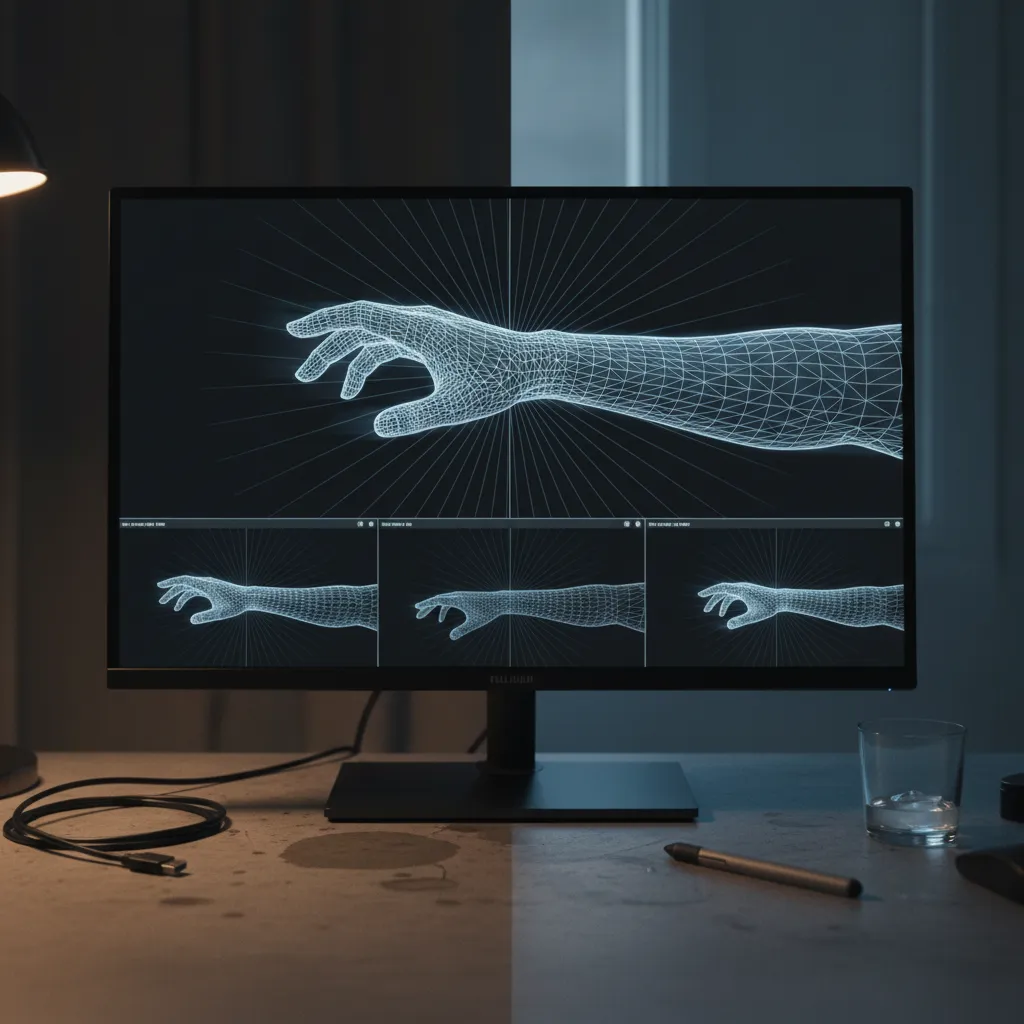
You can rotate the avatar freely. Slow the sign down to quarter speed. Zoom into just the fingers. Switch between a front view and a signer's-eye-view so you see the sign the way your own eyes would see your hands performing it. That last detail sounds small. It's not. Mirror-image confusion is one of the biggest stumbling blocks for beginning ASL learners, and the rotatable avatar eliminates it completely.
The avatar also demonstrates non-manual markers — the eyebrow raises, head tilts, mouth morphemes, and eye gaze patterns that carry grammatical meaning. Most video-based courses under-teach these. The Signs platform makes them a first-class element of every lesson, because the AI can detect whether you're producing them and score accordingly.
The Broader Shift: AI Gesture Recognition Beyond ASL
Here's the revelation that reframes everything: the computer vision stack NVIDIA built for Signs isn't limited to American Sign Language. The same architecture can be trained on British Sign Language, Japanese Sign Language, International Sign, or any of the 300+ sign languages used worldwide.
That matters because sign languages are not universal. BSL and ASL are mutually unintelligible — a British signer and an American signer can't automatically understand each other. Each language needs its own training data, its own curriculum, its own cultural context. But the underlying AI sign language recognition engine is transferable.
We're looking at the beginning of an ecosystem, not a single product. Just as speech recognition AI spawned pronunciation tools for dozens of spoken languages, gesture recognition AI will spawn learning tools for dozens of signed languages. The 2026 NVIDIA Signs launch is the proof of concept. The explosion comes next.
What This Means If You Want to Learn Sign Language Online in 2026
Alright, let's get practical. You're reading this because you're curious about learning ASL — maybe for a family member, maybe for your career, maybe because you're a language nerd who wants the next challenge. Here's your action plan.
Start now, not perfectly. The NVIDIA Signs platform is available in a free tier with core vocabulary and fingerspelling modules. The webcam feedback works on most laptops manufactured after 2022. You don't need special hardware.
Treat facial grammar as non-negotiable from day one. Most self-taught signers develop a habit of signing with a flat face. The AI will flag this immediately. Listen to it. Your eyebrows are doing the work that tone of voice does in spoken languages.
Supplement with community. AI gives you reps and corrections. Deaf community gives you fluency, culture, and real conversation. Find local Deaf events, online ASL meetups, or Deaf creators on social media. Use the app to build your vocabulary, use people to build your communicative competence.
Think of ASL as a language, not a skill. This is the mindset shift that separates people who learn 50 signs from people who become conversational. You wouldn't say you "speak some French" after memorizing 50 words. Approach ASL with the same seriousness — grammar, syntax, cultural context, the whole architecture.
The Underserved Audience That Finally Has a Door
Let's end where we started: with those hearing parents of deaf children. For decades, the research has been devastating. Deaf children with language-rich environments — whether spoken or signed — develop on par with hearing peers. Deaf children without early language access face cascading delays in literacy, social development, and academic achievement. The bottleneck was never the children. It was access to instruction for the adults around them.
An ASL app with webcam feedback doesn't solve systemic problems overnight. But it removes the single biggest excuse: "I don't know where to start, and I can't get to a class." Now you can start from your kitchen table, at any hour, with an AI that patiently corrects your thumb angle until you get it right.
That's not a gimmick. That's the same revolution that made learning any language from home viable — finally extended to the language that arguably needed it most. The technology is here. The platform is live. The only question left is whether you'll open your webcam and start signing.
Ready to speak a new language with confidence?