

How Monolingual Parents Are Using AI Language Apps to Raise Bilingual Kids in 2026
Your five-year-old just asked the AI tutor how to say "dinosaur" in Mandarin for the third time today. She's giggling at the pronunciation feedback. You don't speak a word of Mandarin. And somehow, she's building fluency you never had.
This isn't hypothetical. It's Tuesday night in thousands of homes across the English-speaking world. Monolingual parents — people who maxed out at high school Spanish and forgot it all — are raising bilingual children using AI language apps. Not as a supplement to their own fluency. As the primary vehicle.
The old playbook said bilingual kids need bilingual households. One parent, one language. Immersion schools. Au pairs from abroad. That playbook locked out every family that couldn't afford it or didn't have the linguistic background. In 2026, AI conversation tools have blown that gate wide open.
Why AI Language Learning for Kids Actually Works Now
Two years ago, most AI language tools were built for adults. Vocabulary drills. Grammar tables. Conversation practice calibrated for business trips and cafe orders. Kids bounced off them hard.
What changed is adaptive conversation AI. Modern language learning kids apps in 2026 don't teach children the way they teach adults. They play. They tell stories. They respond to a child's pace, interests, and emotional state. A seven-year-old obsessed with space gets vocabulary wrapped around rockets and planets. A shy four-year-old gets a patient, slow-speaking avatar that waits without pressure.
The technology matured in three critical ways:
- Real-time pronunciation coaching that actually understands child speech patterns, not just adult articulation
- Emotion-aware pacing that detects frustration or boredom and pivots before the child checks out
- Narrative scaffolding — lessons disguised as stories, games, and collaborative world-building
This isn't gamified flashcards with a cartoon mascot. It's genuine conversational practice with an AI tutor for children that adjusts its complexity sentence by sentence.
The Monolingual Parent Bilingual Child Problem — Solved Differently
Here's what nobody in the bilingual parenting space wants to say plainly: most parents who want bilingual kids don't speak the target language. Full stop. The majority of interest comes from monolingual English-speaking families who understand the cognitive, career, and cultural advantages of bilingualism but have no way to model it at home.
Traditional advice told these parents to give up or hire help. Expensive immersion programs. Native-speaking nannies. Saturday language schools with mixed results. These options still exist and still work. But they carry price tags that exclude most families.
AI bilingual parenting apps have created a middle path. The parent doesn't need to speak Mandarin, Spanish, French, or Arabic. The AI handles the conversational modeling. The parent handles something equally important — consistency, encouragement, and showing up.
What Monolingual Parents Actually Do (The Daily Reality)
Let's get granular. A monolingual parent raising a bilingual child with AI tools in 2026 typically follows a pattern like this:
Morning Routine Integration
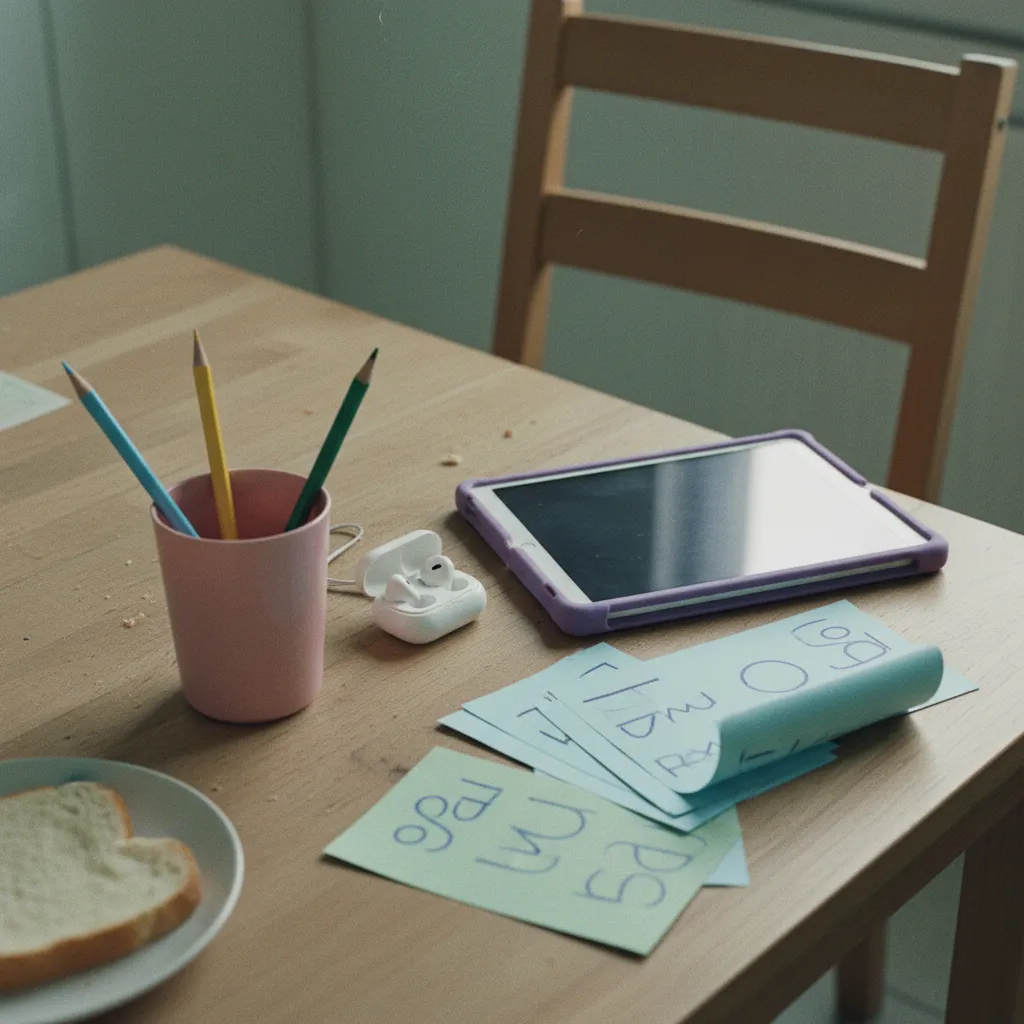
Fifteen minutes before school. The child opens a conversation session on a tablet. The AI greets them in the target language, asks about their morning, and introduces two or three new words embedded in a short interactive story. The parent sits nearby, drinking coffee, occasionally asking "What did it teach you today?" in English.
That question matters more than you think. It triggers recall. The child has to translate the experience back, which deepens encoding.
After-School Deep Practice
Twenty to thirty minutes of structured AI conversation. This is the load-bearing session. The app tracks where the child is — vocabulary breadth, sentence construction ability, listening comprehension — and builds the session around gaps. Some days it's heavy on listening. Others push the child to produce full sentences.
At LingoTalk, we've seen that this kind of adaptive AI conversation practice produces measurable fluency gains even when the parent can't verify what's being said. The app provides session summaries in English so parents can track progress without needing the target language.
Weekend Cultural Sessions
The best outcomes happen when AI practice connects to real-world context. Parents play music in the target language during weekend breakfast. They watch age-appropriate shows with subtitles. They cook a recipe from the target culture together. None of this requires the parent to speak the language. It requires intention.
The AI app becomes the linguistic engine. The parent becomes the motivational framework.
Child Safety and AI: What Parents Must Verify
Let's address the elephant. You're handing your child a device with an AI that talks back. Safety isn't optional — it's the first filter.
Here's what to check before any AI tutor for children touches your kid's screen:
Data Privacy Standards
The app must comply with COPPA (in the US) or equivalent child data protection laws in your region. This means no collection of biometric voice data without explicit parental consent. No selling of interaction logs. No training models on your child's conversations without disclosure. Read the privacy policy. Actually read it.
Content Guardrails
Conversational AI can go sideways. A quality bilingual parenting app for kids will have hard content boundaries — topics the AI cannot discuss, responses it cannot generate. Look for apps that publish their safety architecture openly. If a company won't tell you how they prevent inappropriate content, walk away.
Screen Time Boundaries Built In
The best language learning kids apps in 2026 enforce their own session limits. They'll end a session after the designated time regardless of the child's desire to continue. They'll remind parents when cumulative daily screen time crosses thresholds. The app should be an ally in the screen time battle, not an adversary.
Human Oversight Layers
Some platforms offer human review of AI-child interactions on a sampling basis. This adds a layer of quality assurance that pure AI monitoring can't match. It's worth prioritizing.
Realistic Milestones: What to Expect Year by Year
Parents want numbers. Fair enough. Here's what research and platform data suggest for a monolingual parent bilingual child scenario using consistent AI-assisted practice:
Year One (Ages 4-6 Start)
- 200-400 word receptive vocabulary in the target language
- Basic comprehension of simple commands and questions
- Single-word and two-word responses in conversation
- Comfort with the sound system — the child stops perceiving the language as "weird"
Year Two
- 800-1,200 word receptive vocabulary
- Simple sentence production (subject-verb-object structures)
- Ability to follow a short story told entirely in the target language
- Beginning of unprompted language use — the child says target-language words by choice, not prompt
Year Three
- Conversational fluency in familiar topics — family, school, food, animals, weather
- Paragraph-level speech production
- Self-correction emerging — the child catches their own errors
- Enough foundation to benefit from immersion experiences (travel, language camps, pen pals)
These milestones assume 20-30 minutes of daily AI practice plus cultural exposure. Miss weeks consistently and they slide. There's no shortcut on frequency.

Choosing the Right AI Language App for Your Child
The market is crowded. Here's how to filter fast:
Conversation-first, not drill-first. If the app leads with flashcards and matching games, it's 2019 technology with a 2026 label. Your child needs to talk and be talked to. Prioritize apps built around AI conversation — like LingoTalk — where the core experience is adaptive dialogue, not rote repetition.
Age-appropriate voice and pacing. Have your child try the app for five minutes while you watch. Do they lean in or zone out? Children are ruthlessly honest evaluators of engagement. Trust their body language over the app store rating.
Parent dashboard in your language. You can't support what you can't see. The app must report progress, flag struggles, and suggest offline activities — all in a language you actually understand.
Flexible target language options. Your child might start with Spanish and develop curiosity about Korean two years later. A quality platform accommodates that growth without starting over.
The Hardest Part Isn't the Technology
It's the consistency. Every monolingual parent who's successfully raising a bilingual child with AI tools says the same thing: the app works, but only if you show up every day to make sure it gets used.
You'll have weeks where your kid resists. Weeks where life gets chaotic and practice drops. Weeks where you wonder if any of it matters because you can't understand a word your child is saying in their new language.
Keep going. The research is unambiguous — children who maintain consistent AI-assisted language practice show durable fluency gains that compound over time. The parents who succeed aren't linguistic experts. They're just stubborn about the schedule.
Your Move
You don't need to speak the language to give your child the language. That's the fundamental shift of 2026. AI language learning for kids has matured past novelty into genuine utility. The tools exist. The safety frameworks exist. The evidence exists.
What's required from you is simpler and harder than any technology: the daily decision to prioritize it. Set the timer. Open the app. Sit nearby. Ask your kid what they learned. That's the whole method. And it works.
Ready to speak a new language with confidence?