
How Non-Bilingual Parents Are Using AI Apps to Raise Bilingual Kids at Home in 2026
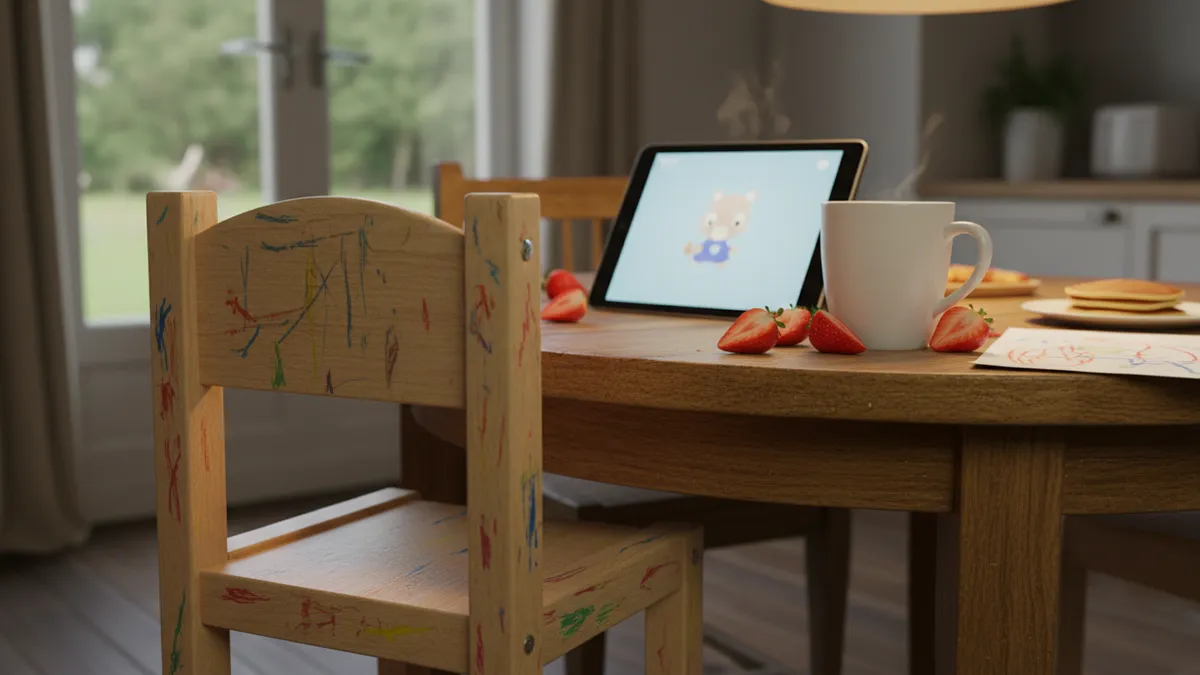
A five-year-old in Phoenix says "quiero más fresas" at the breakfast table. Her mom doesn't speak Spanish. Her dad took two years of it in high school and remembers roughly nothing. Nobody in the house is bilingual. The kid learned the phrase from a twenty-minute AI conversation session the night before—one her parents sat in on, stumbling through the same words, laughing at the same corrections.
That scene would have been science fiction a decade ago. Now it's Tuesday.
Nearly half of American parents say they regret never learning a second language. Sixty-four percent want their kids to learn Spanish specifically. But here's the dirty secret the language-education industry doesn't advertise: for generations, the standard advice has been "just hire a bilingual nanny" or "enroll them in immersion school." Advice that quietly assumes you have money, access, or a bilingual partner. Most families have none of the three.
AI language learning for kids has blown a hole in that wall. And the parents pouring through it aren't waiting for permission.
The Old Playbook vs. the AI Playbook
Let's put both approaches on the table. They deserve honest comparison.
The Traditional Route: Expensive and Gatekept
The gold standard used to look like this: dual-language immersion programs, bilingual babysitters, weekend heritage-language schools, or a parent who already speaks the target language doing the heavy lifting at home.
These methods work. Nobody's arguing otherwise. Immersion is powerful. But immersion programs have waitlists measured in years. Bilingual nannies in major metros cost 20-40% more than monolingual ones. Heritage schools serve specific communities and aren't accessible to everyone.
The traditional route also carries an unspoken requirement. Someone in the child's daily life must already be fluent. If you only speak English, you were essentially told to outsource your kid's bilingualism to someone else—and pay handsomely for the privilege.
The AI Route: Messy, Democratic, Surprisingly Effective
The new playbook looks different. A parent downloads an AI language app for families, sits on the couch with their kid, and both of them talk to an AI conversation partner. The parent sounds terrible. The kid sounds terrible. The AI doesn't care.
This is the part the industry undersells: AI doesn't judge. It doesn't get tired at 7 PM. It doesn't cancel because its car broke down. It adjusts difficulty in real time, switches between playful storytelling for the kid and practical vocabulary for the parent, and never once makes anyone feel stupid for mispronouncing "desarrollar."
The families getting results in 2026 aren't choosing AI instead of human interaction. They're using it to build a foundation that makes every future Spanish tutor, travel experience, or classroom hour dramatically more effective.
Why "Learn Together" Beats "Learn for Them"
Here's something the research backs up that intuition already knows: kids mirror what their parents value. Not what parents say they value. What they actually spend time doing.
A child who watches their parent struggle through verb conjugations, laugh at mistakes, and try again tomorrow absorbs something no app can teach on its own. They learn that learning is normal. That adults don't have all the answers. That effort is the point.
Parent-child language learning flips the usual dynamic. Suddenly the five-year-old corrects Mom's accent. Suddenly Dad asks his seven-year-old for help remembering a word. The hierarchy flattens. Both people are beginners. Both people are invested.
LingoTalk's conversation-based approach leans into exactly this. The AI adapts to multiple skill levels in a single session, so a parent at square one and a child at square three aren't bored or overwhelmed. They're just talking. Together.
What Actually Works: The Daily Habits That Stick
Forget hour-long study sessions. The families succeeding with bilingual parenting apps in 2026 are doing something far less dramatic.
Ten Minutes at Dinner
One method gaining traction: families spend ten minutes before or after dinner in their target language. The AI prompts a simple conversation topic—what happened today, what's for dinner, describe your favorite animal. Nobody's conjugating on a whiteboard. They're chatting.
Storytime in Two Languages
AI tools now generate bilingual bedtime stories calibrated to a child's reading level. The parent reads the English lines. The AI reads the Spanish lines aloud. Over weeks, the parent starts reading a few Spanish lines too. Over months, the kid corrects them.
Screen Time That Actually Teaches
This is the real unlock. Every parent alive in 2026 is negotiating screen time. AI language apps reframe the negotiation entirely. Twenty minutes with an AI conversation partner isn't screen time in the way that passive video consumption is. The child is speaking, listening, responding, creating. The brain is active.
Turning screen time into bilingual bonding time isn't a marketing line. It's what happens when a parent sits next to their kid and both of them talk to the same AI—stumbling, correcting each other, building an inside joke about how they both keep forgetting the word for "butterfly."
The Objections (And Why They're Losing Ground)
Monolingual parents carry a specific guilt. Let's name the two biggest fears and be honest about them.
"I'll Teach My Kid Bad Pronunciation"
Fair concern. Outdated conclusion. AI conversation tools in 2026 provide real-time pronunciation feedback that's more consistent than most human tutors. The child isn't learning pronunciation from the parent. They're learning it from the AI. What they're learning from the parent is that bilingualism matters enough to try.
"It Won't Be Real Immersion"
Correct. It won't. And that's fine. The research on raising bilingual children has evolved past the all-or-nothing immersion model. Consistent, meaningful exposure—even 20-30 minutes daily—builds neural pathways for language acquisition that persist into adulthood. Perfection was never the bar. Consistency is.

The families making this work aren't aiming for native fluency by kindergarten. They're aiming for a kid who's comfortable hearing, attempting, and eventually thinking in a second language. That's a different goal, and it's wildly more achievable.
2026's Landscape: What's Changed in the Last Two Years
Two years ago, AI language tools for kids were glorified flashcard apps with a chatbot bolted on. The gap between then and now is staggering.
Conversational AI now tracks a child's vocabulary growth across sessions and introduces new words based on what they've already mastered—not a preset curriculum designed for the average learner. Emotional tone detection adjusts the AI's personality when a child gets frustrated. Adaptive storytelling weaves a child's interests—dinosaurs, soccer, space—into language practice so seamlessly the kid forgets they're learning.
LingoTalk has been at the center of this shift, building conversation tools that treat language as something you do with people, not something you study alone. When the whole family uses the platform, progress compounds. The dinner-table Spanish starts echoing into car rides, grocery trips, and bedtime.
The Bilingual Household Myth
Here's the biggest lie in bilingual parenting: you need a bilingual household to raise bilingual kids.
You don't. You need a household that practices. The distinction matters. A bilingual household where nobody reads to the kid in the second language produces worse outcomes than a monolingual household that spends fifteen engaged minutes daily with an AI conversation partner.
Environment matters less than intention. Intention backed by consistent action—even imperfect, accented, grammatically wobbly action—wins.
Where This Is Going
The trajectory is obvious to anyone paying attention. AI language learning for kids will become as normal as reading apps within two years. Schools will assume some level of home language exposure the way they currently assume kids arrive knowing the alphabet. The parents who started in 2024 and 2025 already see their children code-switching casually, asking what words mean in Spanish unprompted, treating bilingualism as default rather than special.
The parents starting now, in 2026, aren't behind. The tools are better than they've ever been. The research is clearer. The guilt about not being bilingual yourself is the last barrier, and it dissolves the first time your kid teaches you a word.
You don't need to speak a second language to teach your kids a second language at home. You need to be willing to learn one alongside them. The AI handles the expertise. You handle the showing up.
That's always been the part that mattered most.
Ready to speak a new language with confidence?