
Language Learning as Anti-Aging: How Seniors Are Using Patient AI Tutors to Boost Cognitive Health
"I'm too old for this, kid."
Arthur sighed, tapping his tablet screen with a heavy, hesitant finger.
"My hard drive is full."
He was seventy-two.
He wanted to learn Italian before his granddaughter's wedding in Rome.
But he was terrified.
Terrified of forgetting.
Terrified of looking foolish.
Most of all, terrified of the frustration in a human teacher's eyes.
I hear this exact script every single week from older adults who desperately want to sharpen their minds but have been utterly defeated by the traditional classroom model, the fast-paced apps designed for teenagers, and the crushing anxiety of performance that shuts down the aging brain's ability to absorb anything new.
Language learning for seniors isn't about passing a test.
It's about survival.
It's cognitive anti-aging.
The Human Tutor Problem
"They nod, but I know they're annoyed."
That was Maria, sixty-eight, trying to reclaim the Spanish her parents spoke.
She hired a private tutor.
A nice college kid with good intentions.
But human beings have limits.
When you ask someone to explain the difference between 'por' and 'para' for the eighth time in a single hour, you will see their eye twitch.
You will hear the subtle, almost imperceptible change in their breathing.
Seniors pick up on these micro-expressions instantly.
The moment they sense frustration, cortisol floods their system.
Anxiety spikes.
Neuroplasticity shuts down.
The brain locks the doors and pulls the blinds.
You simply cannot build new neural pathways when your nervous system is convinced it's under attack from social judgment, which is exactly why putting a senior in a room with a twenty-something polyglot who learns by osmosis is a recipe for a massive, confidence-destroying disaster.
They demand speed over integration.
They demand performance over practice.
And for an older adult, that pressure is toxic.
Enter the Machine
"Wait, it doesn't care if I mess up?"
Arthur looked at me, suspicious.
"It's a machine, Art. It has nowhere to be."
This is the breakthrough.
The rise of AI tutors for cognitive health changes the entire landscape of adult education.
An AI doesn't check its watch.
It doesn't have a dinner date.
It doesn't sigh, roll its eyes, or subtly shift its tone when you forget the word for 'apple' again.
It just waits.
Patient AI language practice is the ultimate safe space for a fragile ego and a rigid mind.
When we built the AI tutor at LingoTalk, we didn't just program it with vocabulary and grammar rules, but rather we trained it to mimic the most empathetic, endlessly patient teacher you've ever had, specifically designed to adapt its pacing to the exact cognitive rhythm of the user without a single ounce of judgment.
The anxiety vanishes.
The cortisol drops.
The brain opens up.

The LingoTalk Approach
"I asked it the same question ten times."
Arthur laughed.
"It just answered me. Ten times."
That is by design.
We built LingoTalk to be a sandbox, not a testing facility.
Older adults don't need gamified punishment.
They don't need passive-aggressive notifications telling them they lost their daily streak.
They need a digital companion that moves at the speed of their curiosity.
Rewiring the Hardware
"My doctor said do crossword puzzles."
I hear this one a lot.
Crosswords are fine.
Sudoku is fine.
But they are isolated workouts for specific, narrow parts of your brain.
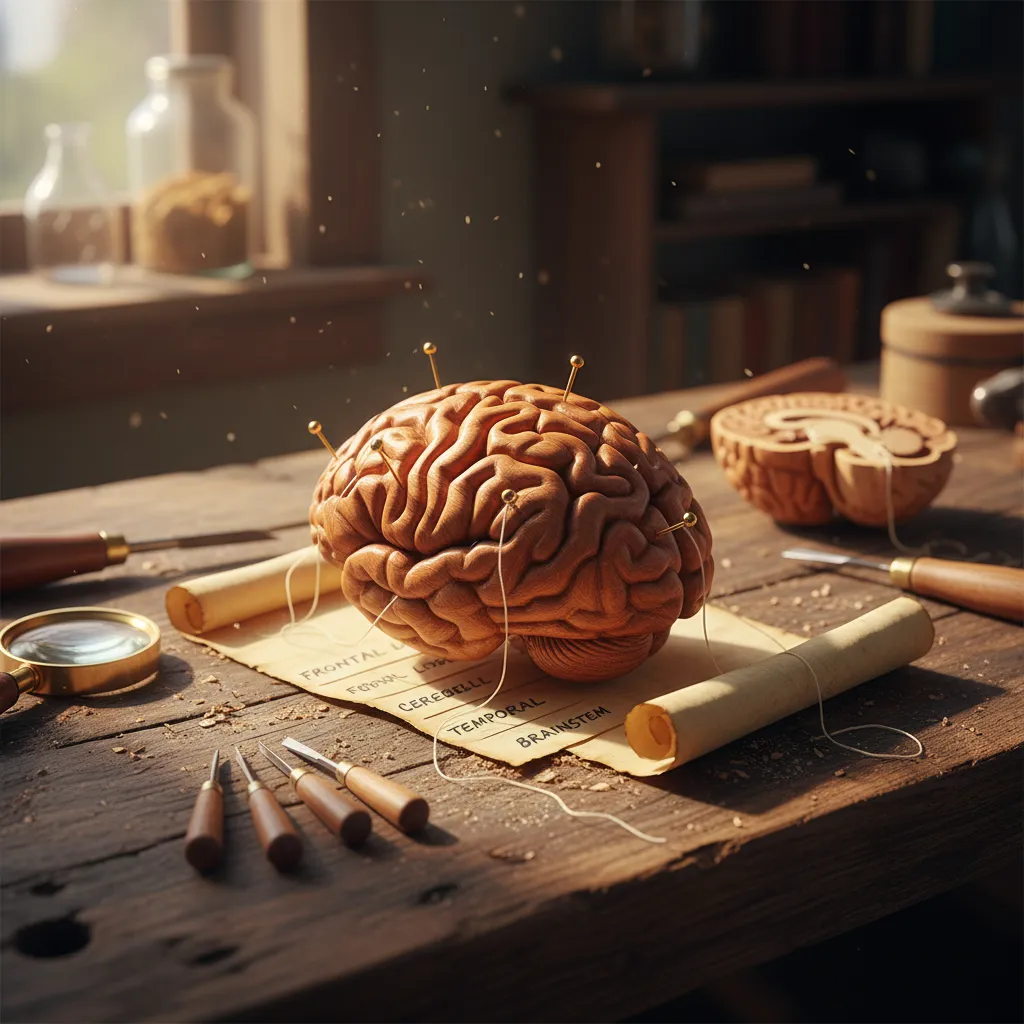
Language is a full-body workout for your grey matter.
When we talk about neuroplasticity and language, we are talking about structural, physical changes to the brain's architecture.
You are forcing your mind to map new sounds to new meanings.
You are building new bridges over damaged or aging cognitive roads.
Every single time you struggle to recall a word, feel it on the tip of your tongue, and then finally grasp it, you are reinforcing a neural pathway that fights back against cognitive decline, thickening the cortex and building a robust cognitive reserve that acts as a fortress against the ravages of time.
It's heavy lifting.
It's supposed to be hard.
But it doesn't have to be stressful.
Think of it as cognitive physical therapy.
It hurts a little, but it's the good kind of hurt.
The kind that means you're getting stronger.
Can You Really Learn Language to Prevent Dementia?
"Can this actually stop me from losing my mind?"
A blunt question from a retired engineer named Thomas.
I gave him the honest answer.
Nothing is a magic bullet.
But the data is hard to ignore.
If you want to learn language to prevent dementia, you are standing on very solid scientific ground.
Bilingual brains show symptoms of Alzheimer's up to five years later than monolingual brains.
Five years.
That's half a decade of memories.
Half a decade of recognizing your grandchildren.
Half a decade of independence.
The act of juggling two languages forces the brain's executive control system to work overtime, constantly filtering out the wrong language and selecting the right one, which builds an incredibly resilient neural network that can withstand toxic protein build-ups far better than a brain that has only ever known one way to speak.
You don't even have to be fluent.
The act of learning is the medicine.
The struggle is the cure.
The destination doesn't matter nearly as much as the friction of the journey.
The Myelin Factor
"So I'm building brain muscle?"
Exactly.
Let's talk about myelin.
It's the insulation around your neural wires.
As we age, that insulation frays.
Signals slow down.
Thoughts get muddy.
Practicing a new language with a patient AI forces your brain to wrap new myelin around those wires, repairing the fraying edges and speeding up the electrical signals that make you who you are.
It's not magic.
It's biology.
The Best Language App for Older Adults
"So I just download that green owl?"
Arthur asked, holding up his phone.
I shook my head.
Gamified apps are built for kids with short attention spans.
They punish you for making mistakes.
They steal your digital hearts.
They use stress as a motivator.
That is exactly what a senior does not need.
The best language app for older adults is one that prioritizes conversation over gamification.
It needs to be a safe environment where making a mistake is just data, not a failure.
At LingoTalk, we focus on real-world scenarios.
Ordering coffee.
Asking for directions.
Talking about your family.
Our AI tutor lets you practice these conversations at your own pace.
You can ask it to repeat itself fifty times.
You can ask it to speak slower.
You can ask it to explain the grammar in plain English.
It will do it with the exact same cheerful, encouraging tone on the fiftieth try as it did on the first, effectively removing the emotional friction that causes so many older adults to abandon their studies before the cognitive benefits even have a chance to take root.
The Daily Protocol
"How much time do I have to put in?"
Fifteen minutes.
That's it.
But it has to be every day.
Consistency beats intensity.
You don't go to the gym for seven hours on Sunday and expect to get ripped.
You lift a little bit every day.
The brain works the exact same way.
Fifteen minutes of patient AI language practice triggers the necessary stimulus.
Then you sleep.
Your brain wires it together overnight.
You wake up a little bit sharper.
A little bit faster.
A little bit more resilient.
Fighting the Loneliness Epidemic
"It's nice just to talk to someone."
Maria admitted this quietly.
Even if that 'someone' is an AI.
Aging can be incredibly isolating.
Isolation accelerates cognitive decline faster than almost anything else.
While an AI tutor isn't a replacement for human connection, it acts as a bridge.
It provides low-stakes social interaction.
It keeps the conversational gears greased.
It gives seniors the confidence to go out and actually talk to real people, knowing they have a safe space to practice when they get home.
The Real Anti-Aging Protocol
"I ordered the wine."
Arthur called me from Rome six months later.
"In Italian. The waiter smiled."
He didn't just remember the words.
He remembered how it felt to be confident.
Language learning for seniors is often marketed as a fun way to travel or talk to family.
But the real benefit is entirely invisible.
It's the quiet confidence that your mind is still expanding.
It's the absolute rejection of the cultural narrative that getting older means inevitable, helpless decline.
When you sit down with an AI tutor, you aren't just memorizing vocabulary flashcards.
You are lifting heavy weights with your brain, fighting back the shadows of cognitive decline, and proving to yourself and the world that the human mind, no matter how many miles it has on the odometer, is built to grow, adapt, and learn until the very end.
The brain wants to work.
It just needs the right environment.
Start today.
The machine is waiting.
And it has all the time in the world.
Try LingoTalk today and give your brain the workout it deserves.
Ready to speak a new language with confidence?