
Raising Bilingual Kids When You're Not Fluent: The Rise of AI Co-Tutors in 2026
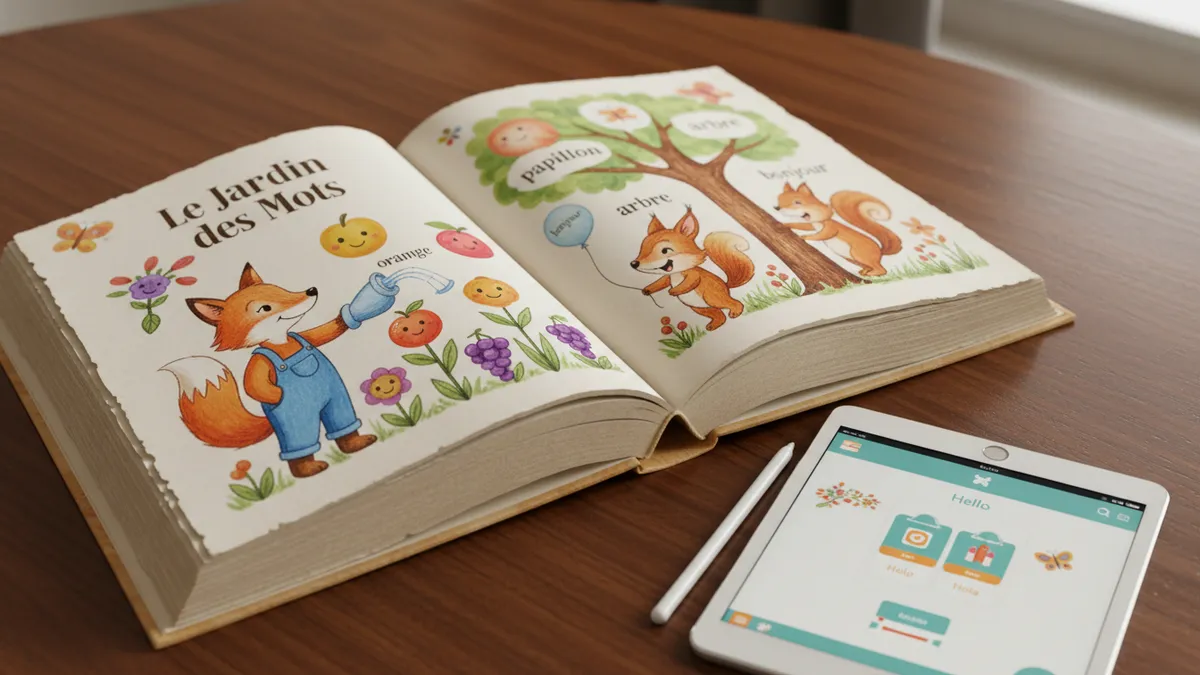
It was 7:00 AM on a Tuesday, and my four-year-old was staring at me while I entirely butchered the Spanish word for strawberry; I had flashcards scattered across the sticky kitchen island, a cold cup of coffee in my hand, and a sinking realization that my rusty high school vocabulary was never going to make her fluent. She blinked slowly, handed me a plastic dinosaur, and walked away to watch a cartoon—leaving me to confront the reality of raising bilingual kids when you yourself are decidedly not. This is the modern parenting trap for those of us who want to raise global citizens but lack the linguistic chops: we buy the books and download the apps, yet we inevitably hit a wall where our own limitations become our children's ceiling. Fortunately, the landscape of bilingual parenting has radically shifted in 2026, ushering in an era where an AI language tutor for kids isn't just a passive screen, but an interactive, native-speaking co-parent that normalizes a target language right in your living room.
The Reality of Bilingual Parenting When You're Barely Conversational
I have tried absolutely everything—from labeling every single piece of furniture in our house with blue painter's tape to exclusively playing French lullabies during naptime—and I can tell you with raw, unpolished certainty that ambient exposure alone does not teach kids a new language. My daughter learned how to tune out the French audio the exact same way she ignores my daily requests to put on her shoes; it simply became background noise, an unremarkable hum in a house where English was still the undisputed currency of actual communication. The fundamental problem with non-fluent parents bilingual aspirations is that language is inherently relational; if you cannot dynamically react to a toddler's chaotic, unpredictable thoughts in the target language, the words feel dead and useless to them. I desperately needed a bridge between my global aspirations and my monolingual reality, which is exactly why I began experimenting with the new wave of conversational AI—specifically looking for something that didn't just drill vocabulary, but actually talked back.
For millennial and Gen Z parents, the pressure to raise culturally adaptable, bilingual children is immense, yet the traditional avenues for achieving this—expensive immersion schools or hiring native-speaking nannies—are wildly out of reach for the average family. I spent months feeling a deep, quiet guilt that I was failing to provide my child with a critical life skill, simply because I hadn't paid enough attention in my own high school language classes; I was projecting my own linguistic insecurities onto her toddlerhood. We are a generation of restless experimenters, always looking for the next life-hack or technological bridge to close the gap between the parents we are and the parents we want to be. That restless search led me directly to the concept of AI language learning for families, though I approached it with the heavy skepticism of someone who had already wasted hundreds of dollars on gamified apps that produced zero actual fluency.
Enter the 2026 AI Co-Tutor: More Than Just an App
When I first booted up our new AI language tutor for kids, I expected another digital worksheet disguised as a game; I had spent years downloading apps that promised fluency but only delivered a fleeting dopamine rush through digital confetti and repetitive, mindless swiping. But the technology we have in 2026 is fundamentally, structurally different—it operates less like a rigid software program and more like an invisible, endlessly patient foreign exchange student who lives inside your smart speaker and tablet. We integrated LingoTalk into our morning routine, not as a structured, sit-down academic lesson, but as a third participant at the breakfast table; the AI would cheerfully ask my daughter about her cereal in perfect, colloquial Spanish, waiting with infinite patience for her stumbling, half-formed replies. This was the missing link I had been searching for: it provided the dynamic, real-time conversational feedback that I physically couldn't offer, turning our kitchen into a genuine bilingual environment without requiring me to magically become fluent overnight.
The brilliance of framing the AI as a "co-tutor" or a digital nanny is that it entirely shifts the psychological burden of teaching off the parent's shoulders, allowing the child to form an independent, organic relationship with the language. The LingoTalk avatar doesn't judge, it doesn't get frustrated when my daughter repeats the same mistake fourteen times, and crucially, its voice recognition model is specifically trained on the lisps, stumbles, and chaotic syntax of young children; it understands her even when I don't. It is an ambient, supportive presence that normalizes the target language in the household, proving to the child that this new vocabulary isn't just a weird game Mommy plays, but a valid, functioning tool for communication. By removing the friction of my own terrible accent and limited vocabulary, the AI allowed my daughter to experience the language in its purest, most authentic form.
My First Month with a Digital Native Speaker
The first week was admittedly a complete disaster of false starts, technical awkwardness, and mutual confusion; my daughter kept trying to physically hand her toast to the tablet, and I spent half my time awkwardly hovering, unsure if I should translate the AI's prompts or just let the digital tutor do its job. I quickly realized my anxious instinct to intervene was actively sabotaging the immersion—I had to forcefully step back and let this AI build its own rapport with her, which meant fully embracing the deep discomfort of not entirely understanding the conversations happening in my own house. Slowly, almost imperceptibly, the magic started to happen: I would overhear her arguing with the LingoTalk avatar about whether dinosaurs liked strawberries, using fragmented but entirely spontaneous Spanish phrases that she had picked up simply by needing to make herself understood. It was a messy, imperfect process filled with grammatical errors and invented Spanglish words, but it was thrillingly alive; she was finally using the language to negotiate, to play, and to express her deeply held, highly illogical toddler convictions.
The Mistakes I Made (So You Don't Have To)
If you are a non-fluent parent attempting bilingual parenting with AI, let me save you from my most spectacular, embarrassing failure: do not treat the AI as a digital babysitter that you can just switch on while you leave the room to fold laundry. For the first two weeks of our successful streak, I got incredibly lazy; I would start the LingoTalk session, pat myself on the back for being an innovative parent, and immediately retreat to the home office, figuring the "native speaker" had the situation completely handled. The progress instantly stalled, because children are incredibly astute, hyper-vigilant observers of adult behavior; if they see that you don't value the language enough to stick around and participate, they will instantly categorize it as an isolated chore rather than a living, breathing mode of family connection. I had to pivot my entire strategy overnight, shifting from an absent, delegating manager to an enthusiastic, albeit bumbling, co-learner who was willing to get my hands dirty in the linguistic mud.
Finding the Sweet Spot in Bilingual Parenting
This harsh realization transformed our entire approach to teaching kids a new language, morphing it from a solitary, screen-based academic exercise into a shared, multicultural family experiment where my daughter and I were finally on the same team. I started sitting with her on the floor, eagerly repeating the AI's phrases with my terrible, distinctly American accent, letting her laugh at my mistakes, and showing her through my own vulnerability that trying and failing is the absolute core of the learning process. We began heavily relying on LingoTalk's brilliant family mode, which discreetly feeds me subtle English translations and prompts on my phone so I can follow along and reinforce the Spanish vocabulary throughout the rest of the day; when the AI taught her the word for "jump" at breakfast, I was armed and ready to use it at the playground that afternoon. You truly don't need to be fluent to raise a bilingual child in 2026; you just need to be willing to curate the right environment, leverage the right technology, and be brave enough to look a little foolish alongside your kid.

Why This Changes Everything for Non-Fluent Parents
The democratization of language immersion is, without a doubt, the single most exciting development for expat families, travelers, and forward-thinking parents who want to gift their children the world but don't have the resources to do it the traditional way. Historically, if you couldn't afford a native-speaking nanny or a spot in an elite bilingual preschool, your children were largely locked out of early childhood fluency—relegated to the same frustrating, delayed, and ultimately ineffective high-school language classes we all endured. AI language learning for families completely shatters this socioeconomic barrier, placing a tireless, culturally nuanced, and entirely customized language partner directly into the homes of absolutely anyone with a Wi-Fi connection. It is not a perfect replacement for human connection, and I am raw and honest enough to admit that an algorithm will never fully replicate the warmth of a real, flesh-and-blood abuela; however, as a practical, daily tool for non-fluent parents, it is nothing short of revolutionary.
Yesterday morning at 7:00 AM, I found myself standing back at that exact same kitchen island, holding that exact same cold cup of coffee, watching my daughter play with her plastic dinosaur. She walked confidently up to the tablet, tapped the LingoTalk icon, and seamlessly informed her digital co-tutor in flawless, casual toddler-Spanish that the dinosaur was very hungry for a strawberry; the AI responded with a cheerful, native-sounding follow-up question, and I just stood there in the quiet kitchen, marveling at the invisible bridge we had somehow managed to build. We are still experimenting every single day, still stumbling through complex conjugations, and still figuring out the boundaries of this brave new world of bilingual parenting—but we are doing it together, and to my absolute astonishment, it is actually working. If you've been waiting for a sign to start your family's language journey, take it from someone who has failed a dozen different ways: download the tools, embrace the inherently messy process, and let the technology help you open the world for your children.
Ready to speak a new language with confidence?