
VR Meets AI: How Virtual Reality Language Immersion Is Replacing Study Abroad in 2026 (and Why It Might Actually Be Better)
Remember when everyone said mp3s would never replace vinyl? That the warmth, the ritual, the crackle — irreplaceable. Then Spotify happened. Not because digital was better in some absolute sense, but because it removed every barrier between a person and the music they wanted to hear. Suddenly the question wasn't quality versus convenience. It was: what if you could have both?
That's where we are with language learning in 2026. Virtual reality language immersion is the Spotify moment — the point where accessibility, quality, and AI converge so completely that the old gatekeepers (expensive flights, semester-long visas, $15,000 tuition bills) start to look less like prerequisites and more like... vinyl. Beautiful, sure. But not the only way to hear the song anymore.
The Quiet Revolution Most Learners Haven't Noticed
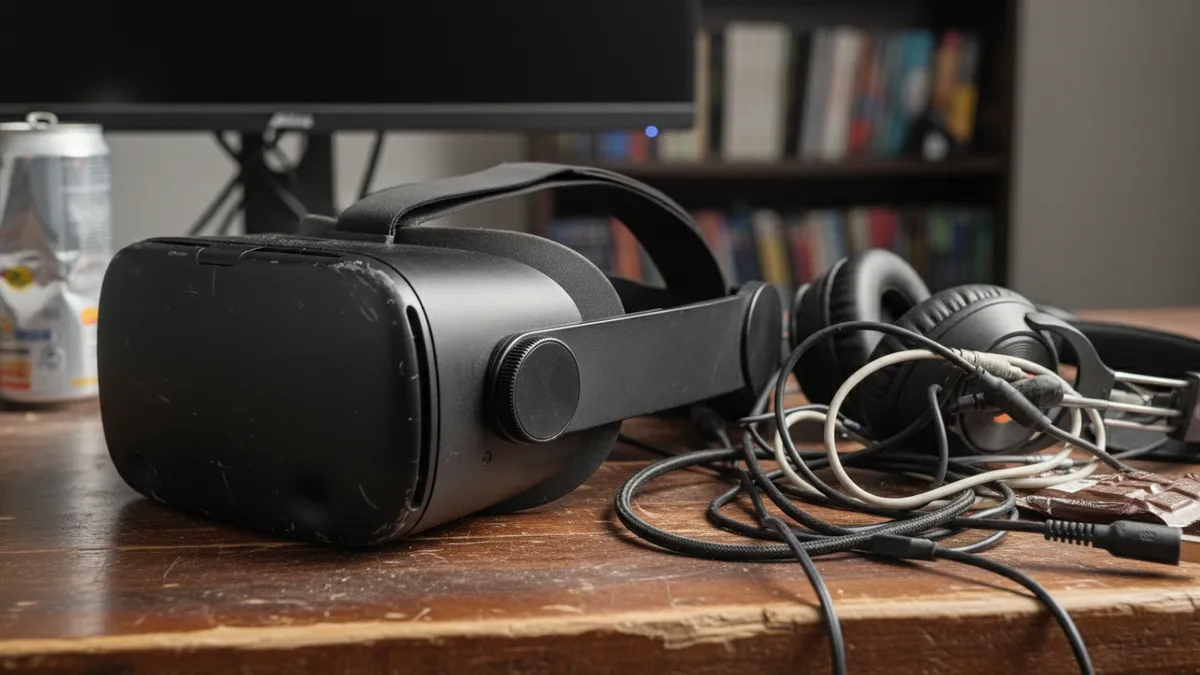
Here's the thing that keeps catching people off guard. VR language learning isn't new-new. Early attempts felt like educational software wearing a headset — clunky, lonely, more tech demo than pedagogy. But the 2025–2026 wave? Completely different animal. Meta Quest 3S dropped below $250. Standalone headsets now run AI conversation partners that adapt in real time. The gap between "VR gimmick" and "genuine immersive language practice" didn't just close — it evaporated.
And yet. Most language learners still don't know this world exists. They're grinding flashcard apps at 11 PM, wondering why they freeze up the moment a real conversation starts. The irony is almost poetic — the tool that specifically targets speaking anxiety is the one nobody's talking about.
What the Research Actually Says (It's Compelling)
Let's talk numbers, because vibes alone don't justify strapping a screen to your face. A 2025 meta-analysis published in Language Learning & Technology compared VR-immersed learners against traditional classroom and study-abroad cohorts across 14 studies. The findings hit different than you'd expect.
VR learners retained vocabulary at rates 18–23% higher than classroom-only groups after 30 days. More striking: their speaking anxiety scores — measured on the Foreign Language Classroom Anxiety Scale — dropped nearly twice as fast as control groups. The researchers attributed this to what they called the "low-stakes embodiment effect." You're in a Parisian café, ordering croissants, messing up your subjunctive. But nobody's actually judging you. Your AI conversation partner just... adjusts. Rephrases. Waits.
Study abroad still showed advantages in cultural nuance and long-term social integration — nobody's pretending a headset replaces making actual friends in Buenos Aires. But for raw acquisition speed, anxiety reduction, and vocabulary retention? Virtual reality fluency training is pulling ahead. And it costs roughly the price of two months' rent in any study-abroad city.

Why VR + AI Is a Different Beast Than VR Alone
The real unlock isn't the headset. It's what's running inside it. Earlier VR language apps gave you pre-scripted scenarios — choose option A or option B, like a Duolingo tree wearing 3D glasses. Fine for beginners. Suffocating for anyone past A2.
AI language learning VR in 2026 works more like jazz improvisation. The conversation goes where you take it. You're in a simulated Tokyo train station asking for directions, and the AI vendor doesn't just recite a script — they respond to your actual words, your pronunciation quirks, your hesitations. They throw in slang if you're handling the basics. They slow down if you're drowning. Some platforms even adjust the ambient noise level based on your proficiency, gradually simulating the chaos of real-world listening conditions.
This is the difference between watching a cooking show and standing in the kitchen with someone who hands you the knife. VR conversation practice with adaptive AI creates the pressure of real interaction without the paralysis. At LingoTalk, we've been tracking this shift closely — the same principles that make AI-powered conversation practice effective on a screen become exponentially more powerful when your brain genuinely believes it's there.
The Vinyl Argument: What Study Abroad Still Does Best
Fairness matters here. Let's not pretend the disruption is total. Study abroad programs offer things no headset can replicate — yet. The 2 AM philosophical conversation with your host family that rewires how you think about politeness. The bureaucratic nightmare of opening a foreign bank account that teaches you vocabulary no app would prioritize. The loneliness that forces you to reach out in your target language because your survival literally depends on it.
These are vinyl-crackle moments. They matter enormously. But they also require privilege — financial, logistical, temporal — that most learners simply don't have. A single parent in Ohio. A university student in Lagos. A remote worker in Manila who gets 45 minutes a day between meetings. For these learners, "just go abroad" was never advice. It was a locked door. VR language learning in 2026 is a window — imperfect glass, maybe, but open.
Your Practical Buyer's Guide to VR Language Apps in 2026
Enough philosophy. If you want to learn languages in VR, here's what's actually worth your time and money right now.
Hardware: What You Need
The Meta Quest 3S remains the best entry point — lightweight, standalone (no PC required), and under $300. The Quest 3 offers sharper passthrough and better processing for about $100 more. Apple Vision Pro technically supports some language apps but at $3,500, it's the vinyl audiophile setup. Start with Quest unless you're already in that ecosystem.
Top VR Language Platforms Worth Trying
Immerse VR — The current frontrunner for structured immersive language practice. Live classes with real teachers inside VR environments. Group sessions reduce isolation. Supports Spanish, French, Japanese, Mandarin, German, and English. Best for intermediate learners who want human interaction layered onto virtual settings.
Mondly VR — More beginner-friendly, with guided scenarios and speech recognition. Think of it as the on-ramp. The AI isn't as adaptive as newer competitors, but the scenario variety (hotel check-in, doctor's visit, job interview) covers genuinely useful ground.
Verb — The new kid generating serious buzz. Fully AI-driven open-world conversations. No scripts. You wander a virtual city and talk to anyone. The AI adjusts difficulty dynamically. Currently in early access for Spanish and French, with Mandarin and Korean coming Q3 2026. This is closest to the study-abroad replacement promise.
XR Lingua — Niche but excellent for professional language learners. Simulates business meetings, negotiations, and presentations in your target language. If you need virtual reality fluency for your career, start here.
What to Look For in Any VR Language App
Adaptive AI that responds to your actual speech — not multiple choice. Pronunciation feedback that's specific, not just "try again." Scenarios you'd actually encounter in real life. And critically: a way to track your progress over time. The best platforms export data you can pair with tools like LingoTalk for reviewing vocabulary and reinforcing what you practiced in the headset.
The Anxiety Problem VR Solves That Nobody Talks About Enough
Here's where I want to linger. Because this might be the most important paragraph in this entire piece. Speaking anxiety is the silent killer of language progress. Not grammar gaps. Not limited vocabulary. The sheer terror of opening your mouth and sounding foolish in front of another human being. Research consistently shows it's the number-one reason intermediate learners plateau — they know enough to speak, but they won't.
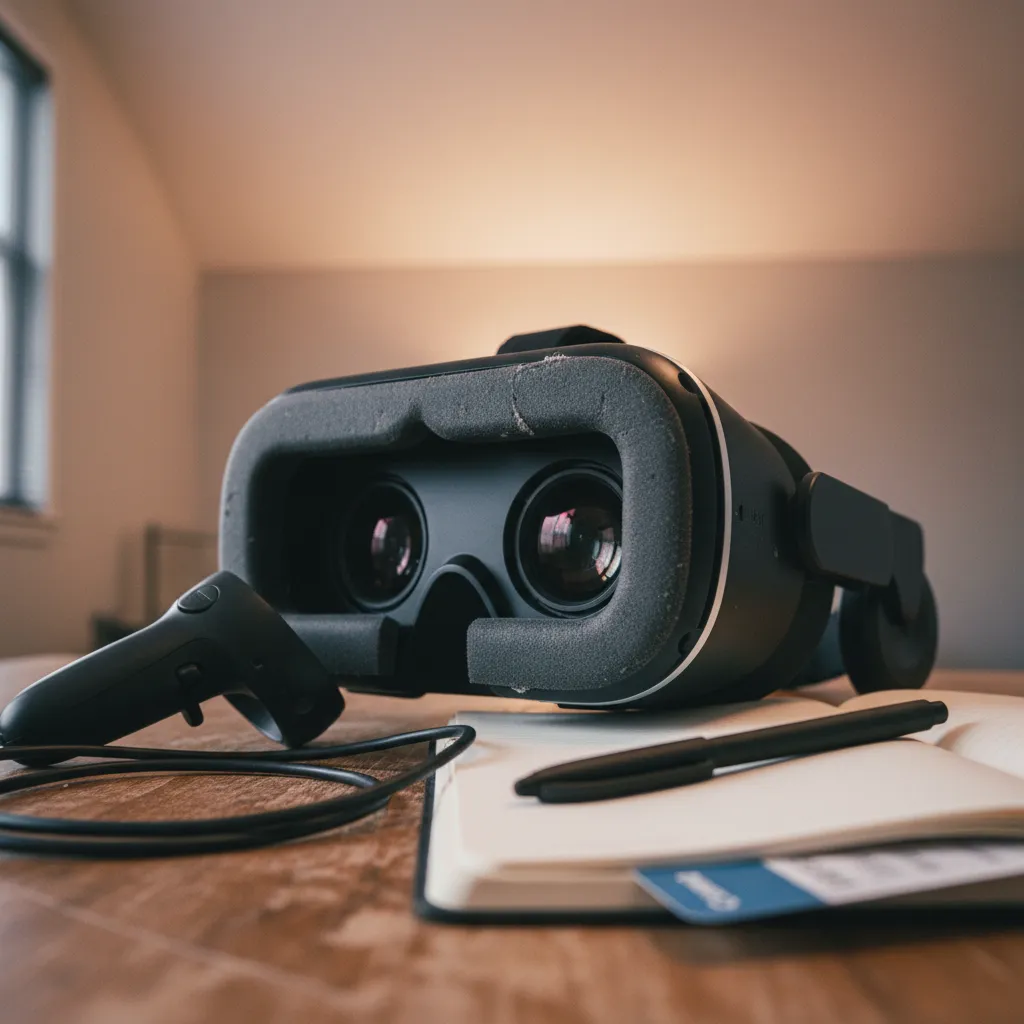
VR conversation practice short-circuits this loop in a way textbooks and even video calls can't. The embodiment tricks your amygdala into treating the interaction as real — your palms sweat, your heart rate ticks up, you feel the social pressure of a face looking at you expectantly. But the consequence layer is removed. You can stumble through ordering ramen in Osaka, butcher every particle, and the AI shopkeeper simply... responds like a patient local. No eye rolls. No switching to English. No story you'll cringe about later.
This is rehearsal space for your bravery. And the research backs it up — learners who logged 10+ hours of VR conversation practice before entering real-world immersion situations reported significantly lower anxiety and higher willingness to communicate. They'd already failed safely. Dozens of times. The real conversation just felt like one more.
The Song Is the Same — the Access Has Changed
We started with Spotify. Let's end there. Streaming didn't make live music less magical. It made music itself less exclusive. You didn't need a record store in your town, a turntable in your apartment, or a trust fund for concert tickets. You needed a phone and curiosity.
VR language learning in 2026 is doing the same thing to fluency. The immersion experience that once required a plane ticket, a visa, and months of savings now requires a headset and — this part hasn't changed — the willingness to sound ridiculous for a while. The tools are here. The research is encouraging. The barrier is lower than it's ever been.
So put the headset on. Mangle some verb conjugations in a virtual piazza. Order imaginary street food in Mandarin. The worst that happens is you learn something. And honestly? That's better than most semesters abroad can guarantee.
Ready to speak a new language with confidence?