Xenoglossophobia Is Sabotaging Your Progress: The Neuroscience of Language Speaking Anxiety (and How AI Helps You Beat It)
Let's start with the ugly truth: you probably already know more of your target language than you can access when it matters. You've studied the grammar. You've memorized the flashcards. You can read a menu, parse a headline, maybe even follow a podcast at 0.8x speed. But the moment a real human being looks at you and waits for you to speak? Your mind goes blank. Your throat tightens. The word you reviewed literally forty minutes ago evaporates like it never existed.
That's not a vocabulary problem. That's not a study-harder problem. That's xenoglossophobia — the fear of speaking a foreign language — and it is neurologically sabotaging your progress in ways that "just practice more" advice will never fix.
What Xenoglossophobia Actually Does to Your Brain
Here's where it gets fascinating and a little terrifying.
Deep inside your temporal lobe sits a small, almond-shaped structure called the amygdala. It's your brain's threat-detection system — the biological smoke alarm that evolved to keep our ancestors alive. When it senses danger (a predator, a cliff edge, a stranger's judgment), it triggers your fight-or-flight response in milliseconds. Cortisol floods your system. Adrenaline spikes. Your prefrontal cortex — the part responsible for complex thinking, word retrieval, and creative language construction — gets essentially deprioritized.
Your brain decides: "We don't need poetry right now. We need survival."
This is called an amygdala hijack, a term coined by psychologist Daniel Goleman. And here's the kicker for language learners: research published in Language Learning journal has shown that foreign language anxiety creates a measurable cognitive load that directly interferes with working memory. The same working memory you need to conjugate a verb, choose the right preposition, and string a sentence together in real time.
So when you freeze up mid-conversation in Spanish and think, "I'm so stupid, I literally just studied this" — you're not stupid. Your amygdala just locked you out of your own vocabulary.

Why "Just Practice More" Is Terrible Advice
I need to rant about this for a second.
Every language learning blog, every well-meaning polyglot on YouTube, every textbook appendix says some version of: "The only way to get comfortable speaking is to speak more." And technically? They're not wrong. Exposure is key. But telling someone with genuine foreign language anxiety to "just go talk to native speakers" is like telling someone with a fear of heights to "just go stand on the roof." Without a structured, gradual approach, you're not doing exposure therapy — you're doing retraumatization.
Here's what actually happens when anxious learners force themselves into high-stakes conversations too early:
- They freeze, confirming their belief that they can't speak
- They avoid future attempts, widening the gap between knowledge and performance
- The anxiety deepens, creating a feedback loop that gets harder to break with each cycle
Psychologists call this the avoidance-anxiety cycle, and it's one of the most well-documented patterns in clinical anxiety research. Language speaking anxiety follows the exact same pattern as social phobia, performance anxiety, and yes — specific phobias.
Which means it responds to the same evidence-based treatments.
The Science of Exposure Therapy (and Why AI Is Perfect for It)
In clinical psychology, the gold standard for treating phobias is graded exposure therapy. The idea is beautifully simple: you expose yourself to the feared stimulus in controlled, gradually increasing doses, starting from a level so low it barely triggers anxiety at all. Over time, your amygdala learns that the stimulus isn't actually dangerous. The threat response weakens. Confidence builds.
The key principles that make exposure therapy work:
- Gradual progression — you start easy and build up
- Repetition — consistent, frequent exposure matters more than intensity
- Low judgment — the environment must feel safe enough that failure isn't catastrophic
- Controllability — the learner sets the pace, not the situation
Now think about what it's like to practice speaking with a human — even a patient tutor. There's always some social evaluation happening. They're listening. They might correct you. They might pause a beat too long. You might detect (or imagine) a flicker of confusion on their face. For someone with language speaking anxiety, that's enough to trigger the amygdala.
This is exactly where AI conversation practice changes the game.
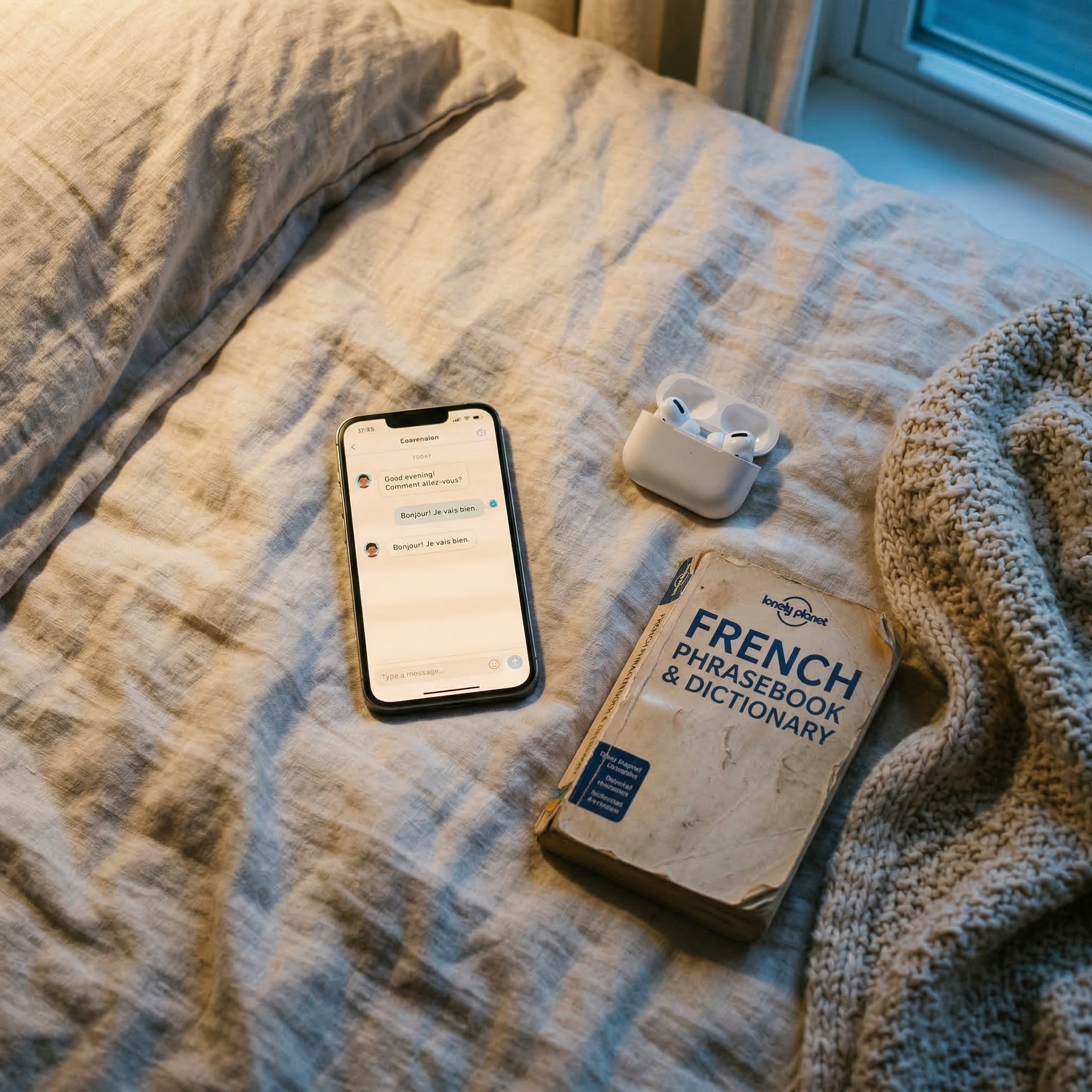
An AI partner like LingoTalk's doesn't judge. Doesn't get impatient. Doesn't give you that look. It's available at 2 AM when your defenses are down and you're weirdly brave. It lets you stumble, restart, butcher a subjunctive, and try again without any social consequence whatsoever.
That's not a workaround. That's clinically aligned exposure therapy — a judgment-free environment where you can systematically desensitize your brain's fear response to speaking a foreign language.
Self-Assessment: How Bad Is Your Language Speaking Anxiety?
Before we get to the protocol, let's figure out where you stand. Score each statement from 1 (never) to 5 (always):
1. I know the answer but stay silent in language class or group settings. 2. My mind goes blank when someone addresses me in my target language. 3. I rehearse sentences in my head before saying them — and still feel unprepared. 4. I avoid phone calls, voice messages, or video chats in my target language. 5. I feel physically uncomfortable (racing heart, sweaty palms, tight chest) before speaking. 6. I compare my speaking ability to others and feel ashamed. 7. I've turned down social invitations or travel opportunities because of language fear. 8. After a conversation, I replay my mistakes obsessively.
Your Score:
- 8-15: Mild anxiety. You get nervous but push through. The protocol below will accelerate your confidence significantly.
- 16-28: Moderate anxiety. Speaking feels like a genuine ordeal. You're likely in the avoidance-anxiety cycle. The 30-day protocol is designed specifically for you.
- 29-40: Severe anxiety. This is significantly impacting your learning and possibly your life. The protocol will help, and you might also benefit from speaking with a therapist who specializes in performance anxiety. No shame in that — it's a power move.
The 30-Day Desensitization Protocol
This protocol uses LingoTalk's AI conversation practice as your exposure therapy tool. It's designed to be gradual, repeatable, and completely within your control. No heroics. No humiliation. Just steady, neurological rewiring.
Week 1: Whisper Mode (Days 1-7)
Goal: Break the silence barrier.
- Practice for just 5 minutes per day
- Use text-based chat only — no voice yet
- Stick to topics you're comfortable with: ordering food, introducing yourself, describing your day
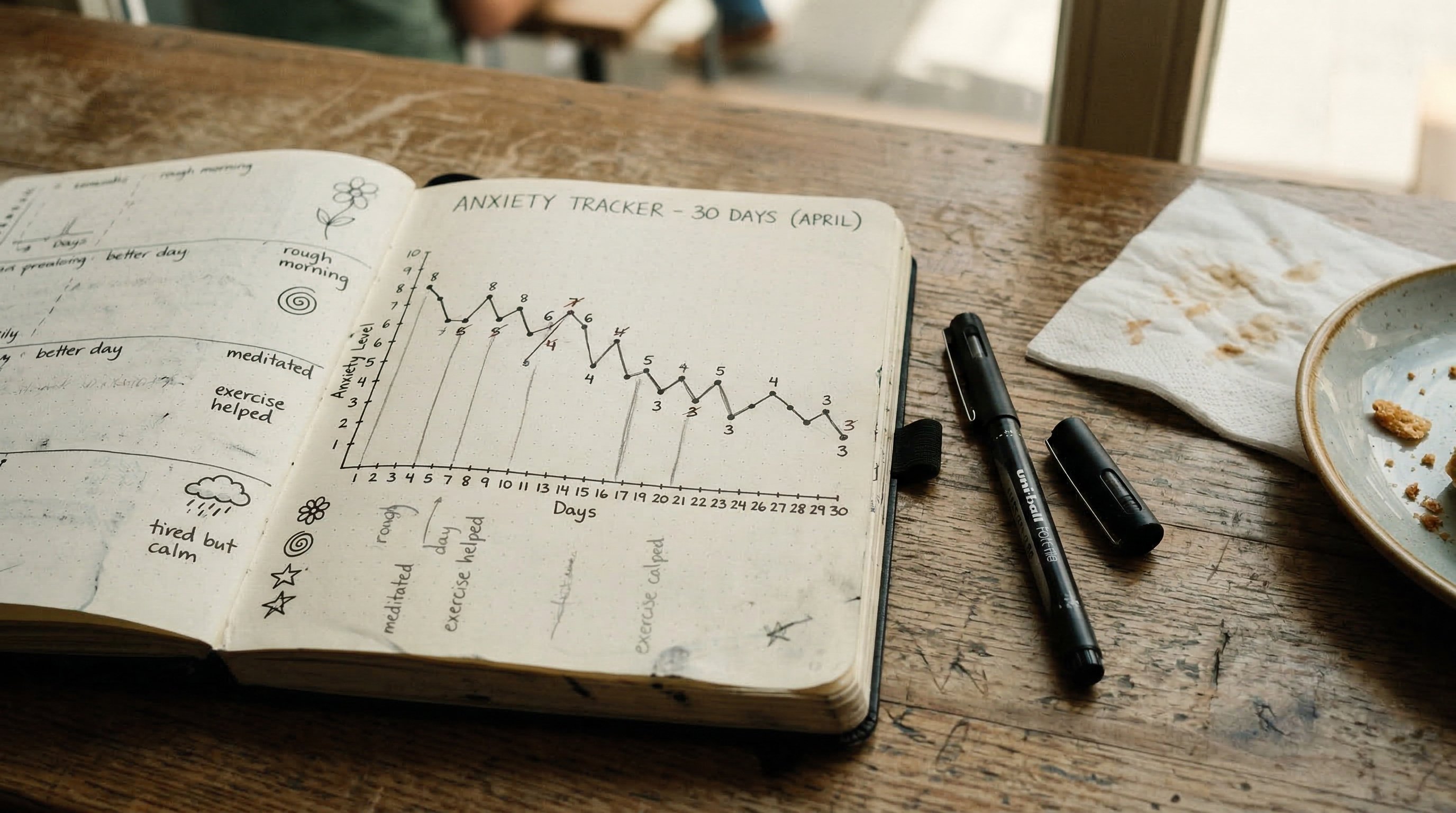
- After each session, rate your anxiety from 1-10 in a simple note on your phone
You're teaching your amygdala that engaging with language production — even typed — is safe.
Week 2: Finding Your Voice (Days 8-14)
Goal: Introduce spoken output in a zero-stakes environment.
- Increase to 10 minutes per day
- Switch to voice mode with LingoTalk's AI
- Start with simple prompts: read a sentence aloud, then respond to a basic question
- It's okay to pause. It's okay to stumble. The AI waits. That patience is the point.
- Keep tracking your anxiety scores
Week 3: Stretching the Comfort Zone (Days 15-21)
Goal: Handle unpredictability.
- 15 minutes per day
- Ask LingoTalk to introduce unexpected topics or ask follow-up questions you haven't prepared for
- Practice the magic phrase: "Can you say that differently?" (in your target language, obviously)
- Try one session where you deliberately make mistakes on purpose. Say the wrong conjugation. Use the wrong word. Watch what happens. (Spoiler: nothing bad.)
Week 4: Real-World Simulation (Days 22-30)
Goal: Bridge to human conversation.
- 15-20 minutes per day
- Use LingoTalk's role-play scenarios: job interviews, doctor visits, debates, storytelling
- On Day 25, have a 5-minute conversation with a real human — a language exchange partner, a tutor, a friend. Just five minutes.
- On Day 30, do it again. Notice the difference.
By this point, your anxiety scores should be noticeably lower. Not zero — that's not the goal. The goal is functional. The goal is that your amygdala no longer treats a Spanish conversation like a saber-toothed tiger.
What the Research Actually Shows
A 2022 study in Computer Assisted Language Learning found that learners who practiced with AI chatbots showed significantly reduced foreign language anxiety compared to control groups — even after just four weeks. The researchers attributed this to the removal of social evaluation threat, the ability to self-pace, and the unlimited repetition without judgment.
Another study from the University of Murcia found that students who used AI conversation tools before human interaction performed better in oral exams and reported higher confidence levels. Not because the AI taught them more grammar — but because it desensitized their fear response enough that their existing knowledge could finally surface.
This is the thing that gets me every time: most anxious language learners don't have a knowledge deficit. They have an access problem. The vocabulary is in there. The grammar is in there. Xenoglossophobia just built a wall around it.
AI conversation practice helps you dismantle that wall, brick by brick, at your own pace, in your own time, with zero witnesses to your worst moments.
The Bigger Picture: Anxiety Isn't Weakness
Can I get a little personal here?
Language speaking anxiety isn't a character flaw. It's not laziness. It's not "being bad at languages." It's your nervous system doing exactly what it was designed to do — protecting you from perceived social threat. The problem isn't that your brain is broken. The problem is that your brain is too good at its job.
The fix isn't willpower. It's not grinding through Duolingo streaks. It's not forcing yourself into terrifying conversations and hoping the fear magically dissolves. The fix is giving your brain enough safe, repeated evidence that speaking a foreign language is not a threat — until it updates its internal model.
That's what exposure therapy does. That's what LingoTalk's AI practice is built for.
So if you scored high on that quiz and felt a pang of recognition — good. That awareness is step one. Step two is starting the protocol. Five minutes. Text-based. Tomorrow.
Your vocabulary is already in there, waiting. Let's go unlock it.
Ready to speak a new language with confidence?